So, You Wanna Be A Flight Nurse… The Future Flight Clinician’s Unofficial Guide to Human Maintenance (Part 1)

Also known as “all the things no one told me about becoming a flight nurse and I was too afraid to ask.”

If you spend enough time around flight medicine, you’ll notice something interesting: we spend a tremendous amount of time preparing people for the clinical side of the job. We teach ventilators. We teach hemodynamics. We teach advanced airway management, critical care pharmacology, blood administration, flight physiology, and the thousand other things required to keep very sick people alive in very inconvenient places. You know… important life saving stuff.

What we don’t teach is how to actually live this job. When I became a new flight nurse nobody sat me down during orientation and explains what happens when you’re eight hours into a humid summer shift, your flight suit has become a personal bog, you’ve consumed enough caffeine to qualify as a controlled substance (basically when you start to hear colors), and dispatch sends you to a hospital two hours from anywhere that resembles civilization before you had a chance to pee. I had to learn all of it through trial and error essentially.

Nobody teaches the proper technique for surviving a gross ER patient bathroom in a nomex onesie with someone’s unlabeled urine specimen looking at you sideways from the sink. Nobody discusses the emotional significance of finding the crew-room shower full of Tribbles (your crew mates’ hair) in the drain after a 20-hour day and something crusty/unidentifiable is chilling on your forearm.

Nobody explains why every experienced flight clinician owns an oddly specific collection of chapstick, anti-chafing or -stank ass products, backup socks and under roos (most likely unmatching, potentialy with holes), emergency snacks, phone chargers, more pain-relievers than Walgreens, and enough caffeine to knock you both into and subsequently out of V-tach.

Most flight crews eventually learn these lessons the same way they learn everything else in medicine: through a combination of observation, suffering, and poor decisions. The reality is that flight medicine as whole isn’t just a job but rather a lifestyle. For some of you that life is 12-hour shift where you go home afterward, sleep in your own bed, and maintain a reasonably healthy connection to society. For others (like moi)….it’s a 24- or 48-hour assignment where you essentially move into a base with a group of coworkers who slowly transition from colleagues to roommates, family members, and occasionally hostage negotiators at 3am.

Either way, there are survival skills nobody teaches: the practical stuff, the weird stuff, or the “I wish someone had told me this three years ago” stuff. NEVER FEAR! I got you! Consider this your Unofficial Guide to the Activities of Daily Living in Flight Medicine*!

*A field manual for moisture management, sleep preservation, strategic snacking, flight-suit bathroom logistics, communal living, and maintaining a small shred of dignity while spending your high-speed career in a helicopter.

Part 1 of this series will include dressing for the weather, hydration and cooling solutions, and navigating the bathroom situation.


Dressing for Success (and Mitigating Inevitable Swamp Ass)

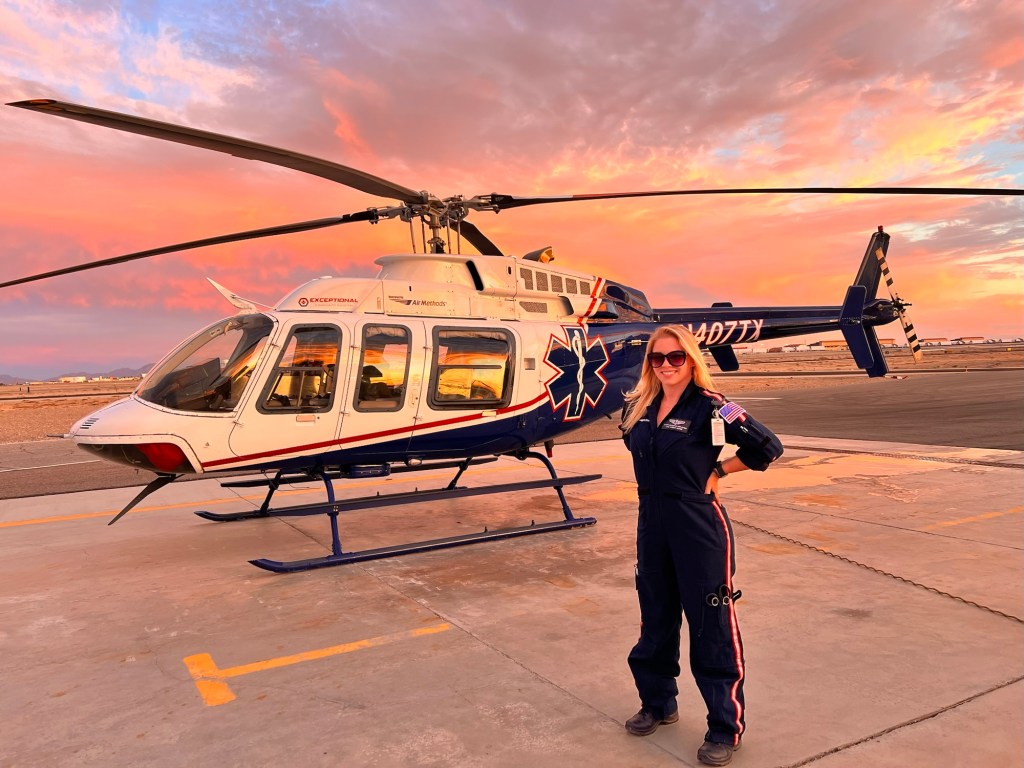
Flight medicine exposes you to a truly impressive variety of climates, often within the same shift depending on where you work. You may start your morning standing on a frozen highway shoulder in March, spend the afternoon in a hospital that appears to refrigerate its patients as if theyre preparing them to go to the morgue, and end the day baking in a different hospital that is hot enough to punish Satan for his transgressions. Through all of it, you’ll be wrapped in a flight suit that somehow manages to be simultaneously too hot, too cold, and slightly uncomfortable at all times because the crotch wants to greet your internal organs.

One of the biggest surprises for new flight clinicians is how much energy gets devoted to managing the environment inside the flight suit itself. We spend years learning how to manage ventilators, but almost no time discussing how to manage the small ecosystem developing between our skin and our onesie. Skin flora really do love a moist girlie.

Most programs require cotton base layers, which is great for fire safety and considerably less great for comfort. Cotton absorbs sweat like it’s trying to set a world record and once it’s wet, it remains wet. Eventually it begins clinging to your body with the determination of an emotionally needy ex— at least I assume thats the analogy because my ex’s stay away with good reason. Since most of us don’t get much say in the matter the goal then becomes learning how to strategically manage the suck.

For me, that starts with keeping everything as lightweight as possible. Compression shorts are one of the greatest contributions modern science has made to flight medicine. Good socks are worth spending money on, even if it feels ridiculous to hand over twenty dollars for something that lives inside your boots. Backup underwear should be considered mandatory equipment. And ladies, this is wear you sacrifice sexy for comfy and embrace the cotton granny life (“one of us, one of us”). No seriously, there are few morale boosters more powerful than changing into a fresh pair halfway through a shift that has gone sideways. It’s amazing how quickly your outlook on life improves when you’re no longer marinating in your own poor decisions. Also for my bra-wearing cohorts say it with me, “sports bra, burn underwire.”

The opposite problem occurs in cold weather. New flight clinicians often assume they need the thickest layers possible only to discover that flight medicine consists of repeatedly transitioning between freezing and sweating every thirty minutes. My least favorite thing in winter was having my layers to survive the single digit outside and then having to spend hours packaging in the Tropics of NICU. Thin layers work better than bulky ones especially ones you can shed. Hand warmers stuffed into random pockets are worth their weight in gold and seriously don’t sleep on footwarmers. Finally…wool socks,which continue to prove that sheep solved a problem we never quite figured out ourselves because being cold is baaaaad. I’ll see myself out.

Now… if you like to live dangerously… all natural fibers are the safest things to wear in flight. However, I’m going to be very blunt and candid on this next part. I have always worried more about hypo/hyperthermia in our work environments moreso than getting burnt and seran-wrapped by synthetic fibers. I personally do wear synthetic clothing designed for hot or cold environments because the likelihood of me getting injured from those things is higher than the fire in the cockpit. Please use your best judgement on this and lean into your programs for guidance. I’m not going to be the one to tell you to break the rules.

THAT ALL BEING SAID: Eventually, all roads lead to moisture management. (I said moist and I’m not apologizing for it)

Now we’re discussing the kind of operational knowledge that only comes from experience. The combination of heat, stress, vinyl seats, whatever legal stimulants you consume, and long shifts creates conditions capable of generating their own biome inside your Gibson Barnes. Anti-chafing products, baby wipes, powder, fresh socks, dry shampoo, and backup underwear become less of a luxury and more of a survival strategy. Experienced flight clinicians don’t pack these items because they’re high maintenance rather they carry them because they’ve suffered enough to know better and all the partners rejoiced for their destankifaction efforts.

There is also a time-honored tradition among flight crews of stepping outside the aircraft and pretending to be deeply invested in weather conditions when in reality they’re simply trying to create enough airflow to cool down portions of their anatomy that haven’t seen fresh air in twelve hours. Desert crews understand this instinctively. If you see someone Captain Morgan’ing on a skid when the wind blows… mind your business. Summer flight medicine in Arizona often feels like existing one degree below spontaneous human combustion. You do what you can to air out and cool down. Cold-weather crews like to think they’re immune until they walk into a heated hospital wearing thermal layers and immediately transform into juicy rotisserie chickens in a Costco wrapper.

The lesson here is simple. Take care of yourself before discomfort becomes a problem. Change your socks. Bring the backup underwear. Protect your skin. Nobody has ever received an award for being the most miserable person at the base, and despite what flight medicine culture occasionally suggests: suffering is not a competitive sport.


How Not to Become a Dried-Out Sea Monkey (Beyond “Just Drink Water”)

One of the most annoying pieces of advice in flight medicine is also one of the most common: “stay hydrated.” Gee…Thanks. I’ll be sure to get right on that as I pop open my second Sadness Soda ™ of the day (credit to my partner Aaron for that name).

The people giving this advice are never wrong….exactly. They’re just dramatically underselling the challenge. Staying hydrated in flight medicine isn’t the same thing as remembering to carry a water bottle around on a trip to Target. It requires actual planning because the job seems specifically designed to interfere with every normal human activity and that includes drinking water.

Somewhere along the way many of us develop a toxic enough relationship with caffeine that would concern a cardiologist and probably qualify us for a short stint in rehab. Entire flight programs appear to function on a delicate ecosystem of energy drinks, coffee, and mutual irritation. We drink caffeine because we’re tired but we’re tired because we work weird schedules but we work weird schedules because somebody thought it would be a good idea to combine critical care medicine with aviation…and we have to fund our extravagant lifestyles.

However the problem is that after your second coffee and first energy drink of the day, your brain starts counting those fluids as hydration but they are not hydrating. They’re just beverages wearing hydration’s skin.

I’m going to hold your hand while I say this, ok? At some point… actual water has to enter your body.

This becomes especially obvious when you work in places like where I work in Arizona where summer feels less like a season and more like a personal attack. Summer flight medicine in Arizona often feels like the devil opened the oven door to check on his cookies and accidentally created an entire state. Literally everything in Arizona wants to kill you and the heat is at the top of the list. Arizona is a state that the sun gives its middle finger to for 3/4’s of the year. The heat doesn’t care how experienced you are. It doesn’t care how smart you are. It doesn’t care that you were “only outside for a minute.” It just sits there waiting for you to make a mistake. It reminds me of a creepy voyeur watching you make poor life choices.

One of the best tricks I ever learned was the partially frozen Camel Back hack. Not fully frozen. That’s rookie behavior. A completely frozen Camel Back is just an oddly shaped brick that just feels weird but if you fill it halfway and lay it flat to freeze it becomes something magical. Then take that and slip it down the back of your flight suit. You get cold water for hours to daintily sip on and for a brief period of time it feels like someone installed air conditioning directly against your spine (heavy on the “brief”). During an Arizona summer that qualifies as a religious experience.

The other lesson I learned the hard way is that just water isn’t always enough. When you’re sweating through a flight suit, hauling equipment through the major tertiary hospitals, and spending hours in triple-digit temperatures, you’re losing more than fluid. Eventually you reach a point where you can drink water all day and still feel vaguely terrible (more than usual if youre over 30) and that’s usually your body reminding you that electrolytes exist and perhaps you should stop treating them like a suggestion.

The truly dangerous thing about dehydration is that it rarely announces itself in a dramatic fashion. Most people expect heat illness to look like collapsing on a helipad when in reality, it usually starts with becoming progressively dumber. You get a headache. Then you become irritable. You can’t seem to focus and simple tasks require an unreasonable amount of concentration. You find yourself staring at equipment you’ve used a thousand times while your brain makes the AOL dial-up noise. AND because we’re healthcare professionals our response to these warning signs is usually to ignore them because we’d know if we were dehydrated…right?

Flight clinicians are exceptionally good at recognizing dehydration in patients although we are considerably less talented at recognizing it in ourselves. We will spend an entire shift teaching about heat exhuastion while surviving on half a bottle of water and three energy drinks.

Eventually you reach what I like to call the Desert Lizard Phase (noun): This is the point where your lips are dry, your urine resembles sweet tea, and you’ve developed an emotional attachment to the nearest air conditioner. Every inconvenience feels personal. Every task feels harder than it should. You’re technically functioning but only in the same way a phone functions when it’s at 2% battery. The frustrating part is that all of this is preventable. Is it glamorous, exciting, worthy of a conference lecture…no, no, and also no. Its simple and just plain preventable.

So here is how you do it: It drinks the water (stop pretending your energy drinks count as hydration) and it uses the electrolytes or it gets the hose, again… and by hose I mean probably a bag of saline in the back of your least favorite ground crew’s vanbulance.

Hydration is one of those things we all know is important and yet we routinely ignore until we start wondering why we’re getting headaches, snapping at our partners, and making questionable life choices. This becomes especially true when you are now working in a flight suit that doesn’t breathe, out in the elements, and slowly getting dehydrated at altitude. Unlike me, heat exhaustion doesn’t announce itself with dramatic fanfare. It sneaks up on you while you’re standing on asphalt in the sun, carrying equipment, wearing layers of protective clothing, and surviving primarily on coffee, beef jerky, and hostility. By the time you recognize it, you’re already behind.


The Bathroom Olympics

There are many things people imagine when they picture a flight clinician: helicopters, high speed critical care badassery, cool flight suits and maybe a slow-motion walk across a helipad while Hans Zimmer music plays in the background. What they do not imagine is a grown adult trying to hoover over the toilet in a small municipal airport bathroom while desperately trying to keep a flight suit from touching a floor that appears to have escaped several public health investigations. And yet…somehow, that is a much more accurate representation of the job some days.

One of the strangest parts of flight medicine is how quickly you learn that basic human needs become logistical challenges. Eating becomes a challenge. Sleeping becomes a challenge. Going to the bathroom becomes a challenge. Things that most people accomplish without a second thought suddenly require planning, timing, strategy, and occasionally a small amount of luck. And before I jump into that, I’d like to say this is mostly aimed at women but this goes for the men too.

When I first started flying, I operated under the same assumption most new flight clinicians do, “I’ll just go before we leave on a call.” I mean that sounds reasonable until you actually start doing the job. Now the tones drop, your agency expects dispatch to launch in seven minutes, you need to collect your blood out the fridge, push the aircraft out of the hangar or secure the air-conditioning unit, you still need to walk-around, and, and, and… then you’re trying to power-pee while hugging the sleeves of your flight suit for dear life.

“I’ll go when I need to.” The phrase assumes you’ll have time when the dispatch comes. You don’t always. You might be launching in that seven minutes. You might be launching after 30 minutes of standby. Flight medicine exists in a constant state of “it depends.” The quick transfer becomes a trainwreck stabilization case. The local flight becomes a cross-state adventure. The patient who was “ready to go” somehow isn’t or doesn’t have a receiving bed assignment. And your bladder, unfortunately, refuses to exercise flexibility. Lesson: go when you first notice you have to and have the time… don’t wait until its urgent.

Over the years…I’ve become convinced that the human bladder is one of the most selfish organs in the body. It doesn’t care about scene times, flight times, launch requests, or weather delays. It doesn’t care that you’re twenty minutes from the nearest bathroom or that you’ve just strapped a critically ill patient into the aircraft. It wants what it wants. Immediately. The bladder is the honey badger of the body: it does not give a single f!ck. And don’t get me started on the poo-panic you get when you’re still 40 minutes out from the receiving.

Women eventually discover that peeing in a flight suit is less of a bodily function and more of an acquired skill. Nobody teaches it during orientation. There isn’t a competency checklist. There should be. At some point you learn how much of the flight suit needs to be unzipped, where to place your sleeves, and how to accomplish all of this without allowing any portion of the suit to touch the floor or toilet bowl. This becomes increasingly difficult the smaller the bathroom gets and the more horrifying the bathroom becomes. It’s a process that requires balance, coordination, and occasionally the flexibility of a circus performer.

So, for the women new to flight… let me help you out. Stay away from the toilet when you unzip, fold your sleeves into the crotch of your flight suit, and tuck them into each leg to secure them. Use one hand to hold it away from the bowl. Voila. Seems simple but several people I’ve spoken to literally took a few shifts to figure it out and the panic I felt when a sleeve touched my all-male base’s bathroom floor cannot be fully expressed in writing.

The men reading this are probably wondering why any of this is complicated. Respectfully, I do not wish to hear from you at this time. Your flight suits zip up from the bottom. Stand closer to the damn toilets, its not as long as you think and your stream isn’t that powerful. I say that with immense love but blunt honesty. If you don’t believe me, take a UV light and look at the front of the toilet and floor. Yeah. Enough said.

ER and muncipal airport bathrooms deserve their own discussion entirely. Like our patients (and most of our colleagues), they exist on a spectrum. Sometimes you walk into a restroom clean, stocked with quality two-ply, and so well-maintained that you briefly consider writing a positive Google review. Other times you open the door and immediately begin reevaluating every decision that brought you to that exact moment and internally ask if you’re up to date on your shots.

The challenge is that you never know which version you’re getting and by the time you’ve gathered enough information to make an informed decision, you’re already committed. It leaves you feeling ick. Cue small individual wipes. I firmly believe wipes should be considered medical equipment. Not convenience items. Not optional supplies. Medical. Equipment. Period.

Throughout my career, wipes have solved an astonishing number of problems. They’ve cleaned hands, faces, equipment, boots, flight suits, coffee spills (as seen on my Instagram reels), and whatever else mess I find. After enough years in flight medicine, you stop viewing wipes as a hygiene product and start viewing them as a universal problem-solving tool.

The longer you do this job, the more you appreciate small comforts. A clean bathroom with actual two-ply toilet paper starts to feel like a luxury resort. A sink with soap feels oddly exciting. The chance to rinse your face, change your socks, or spend thirty uninterrupted seconds not solving somebody else’s problem becomes disproportionately rewarding.

These things sound insignificant until you’ve spent ten hours moving between hospitals, helipads, ambulances, and aircraft. Nobody talks about these things because they aren’t sexy. They don’t make for compelling reels. Nobody posts motivational social media content about successfully peeing without contaminating your flight suit. Trust me on this.

When I first started flying, I thought becoming a good flight clinician meant mastering the medicine and aviation. Years later, I’ve learned it also means figuring out how to function after twelve hours in a flight suit, remembering to drink water before you become mummified, and successfully paying tithe to the Porcelain Gods. And don’t get me wrong…the medicine is still the important part.

But nobody ever talks about the fact that before you can take care of the patient, you have to figure out how to take care of the idiot wearing the flight suit (that idiot is usually you). So hopefully this saves you from learning a few things the hard way. Or at the very least convinces you to pack backup underwear. Trust me on that one… I heard it from a friend.


In the next installment of this series, we’ll move beyond flight suit survival and into the strange world of actually living this job. We’ll discuss the differences between twelve-hour “princess shifts” and the base-squatting lifestyle of 24- and 48-hour crews, including packing strategies, coping mechanisms, and the predictable stages of grieving while on the clock (joking).

We’ll also tackle base life, basemate etiquette, sleep deprivation, nutrition, long shift hygiene, and the collection of random items this experienced flight clinician carries. From emergency snacks and morale showers to emotional support go-bags and the fine line between preparedness and hoarding, we’ll cover all the things nobody teaches in orientation but everyone eventually learns the hard way.

-Clear Skies and Tail Winds

So, You Wanna Be A Flight Nurse… The Remix: Interview your Interviewer

This is part of a series I will tagline as A Retrospective from a “Senior” Flight Nurse. Years ago, as a shiny, new flight nurse I wrote about what it took to get me here. Many years have passed and with experience comes clarity. My goal with this new series is to guide you in your journey to the sky with both an optimistic albeit realistic view. I still maintain that if you want it, you can have it… but you need to learn what “having it” really entails.

Part 1 of this series discusses the hard questions you should be asking of your potential new flight agency.


There’s a weird culture in flight medicine where candidates sometimes feel like they’re supposed to sit quietly in interviews, smile politely, and just feel grateful somebody picked them. Meanwhile you’re interviewing for a job that involves bad weather/sleep deprivation, adrenaline/operational risk/trauma/complex medicine/living with weirdos for 12-48 hours at a clip, and occasionally trying to keep someone alive in what is essentially a loud flying portapotty.

You should absolutely be asking uncomfortable questions. Not rude questions. Not gotcha questions. But honest ones because here’s the thing nobody tells you early on in your career: every flight program has problems. Every 👏single 👏one. The important part isn’t whether issues exist but whether or not leadership is aware of them, HONEST about them, and actively trying to improve them. If an agency can’t tolerate respectful questions during an interview, imagine what happens when you raise concerns after they hire you.

The shiny helicopter, cool flight suit, and social media ✨aura✨ are the easy parts to sell. What’s harder to see from the outside is the operational culture underneath it all. Are crews supported when they decline unsafe flights? Is staffing chronically held together by caffeine, empty promises and incentive pay? Do clinicians feel respected? Is leadership visible? Are people leaving for normal life reasons… or sprinting for the exits because glossed over problems ?

An interview is not a beautypageant where your only job is to impress them rather you are interviewing them too. Frankly in this industry your safety, license, mental health (what’s that?), and quality of life depend on it.

So if I were giving advice to someone walking into a flight interview tomorrow, these are some the uncomfortable questions I’d tell them to ask and if not asked in an interview, they are things I’d want to know before accepting a position. Read on at your own risk 🙃

Here are some hard but (IMHO) fair questions candidates should consider asking about their potential new employer:

Safety Culture & Operational Pressure

Because “safety first” is easy to print on a glossy poster but the real question is what happens when somebody actually says ‘no” to a flight. Flight medicine lives in the uncomfortable intersection of risk/ego/weather/fatigue/production pressure. You want to know whether this company truly backs their crews making conservative decisions… or weather they only endorse safety until it delays a revenue flight.

  • “Can you give me an example of a time your crew declined a flight for safety concerns, and how leadership responded?”
  • “What is your process for handling operational concerns brought up by pilots or clinicians who speak up?”
  • “How often are crews pressured, directly or indirectly, to complete borderline weather minimum flights?”
  • “What trends have you identified in your recent safety reports or ASAP reporting?”
  • “How does your program balance completion pressure with risk management?”
  • “What does your Just Culture process look like for your team?”
  • “What operational decisions changed after your last major safety event or near miss?” (This is a good thing to research about the program before even interviewing— major events often are public knowledge and heavily covered by media).
  • “What is your current fatigue mitigation strategy for crews?”
  • “How often do crews formally debrief difficult or high-risk missions?”

Leadership & Organizational Honesty

Every company says they’re family until staffing gets weird and suddenly Daddy Corporate starts acting stingy. Leadership culture matters because it trickles all the way down to the frontline; if you’ve been in healthcare before, you already know this. If leadership can’t openly discuss their weaknesses, the turnovers, or crew frustrations during an interview, imagine how transparent they’ll be during an ACTUAL operational problem.

  • “What do you believe is the biggest contributor to staff turnover here?”
  • “What would your current crews identify as the largest dissatisfier in the program?”
  • “What feedback do you hear repeatedly from exiting employees?”
  • “How visible and accessible is leadership to line crews?”
  • “How does leadership respond when a clinician disagrees with an operational decision?”
  • “How often do frontline clinicians participate in policy or protocol discussions?”

Clinical Expectations & Support

Some programs advertise themselves like you’re joining a high speed/low drag hoodrat-sh!t medical unit but then you spend 90% of your life transferring stable UTI patients at 2 a.m (no drips, no specials, no fun). There’s nothing wrong with that but candidates deserve honesty about what the job actually looks like. You also want to know whether the agency truly supports clinical growth or just expects you to somehow maintain high-acuity skills through ✨vibes ✨ and annual competencies.

  • “What types of calls are your crews realistically flying most often?”
  • “What skills are expected frequently versus theoretically?”
  • “How are low-frequency, high-risk procedures maintained?”
  • “How does your program support clinicians after particularly traumatic calls?”
  • “What is your orientation failure rate, and what usually predicts success here?”
  • “What continuing education is actually protected time versus expected on personal time?”
  • “How much autonomy do crews truly have in clinical decision-making?”
  • “What are your expectations regarding scene response versus interfacility priorities?”

Staffing & Burnout

Fatigue in this industry gets romanticized waaaaay too much. People joke about being “chronically caffeinated raccoons,” but exhausted clinicians make mistakes and mistakes can kill people. Burnout doesn’t usually happen because of one bad call; it happens because of chronic short staffing, constant OT, poor sleep, lack of support, and feeling like leadership sees you as a pulse with a license.

  • “What percentage of your open shifts are currently filled with overtime or incentive staffing?”
  • “How often are crews held over shift?”
  • “What is your current vacancy rate?”
  • “What does scheduling flexibility realistically look like?”
  • “How long do clinicians typically stay here?”
  • “What differentiates the people who thrive here from the people who leave?”
  • “How often are crews working short or without ideal staffing?”
  • “What systems are in place to prevent burnout besides pizza and woo-woo online learning modules?” (For the love of God dont invoke pizza party protocol in your interview..Actually, maybe just ask what systems are in place to prevent burnout… stop there).

Aircraft, Equipment & Resources

Nothing builds character quite like fighting broken equipment in the back of a vibrating tin can while somebody’s blood pressure actively leaves the chat (we’re cooked). Equipment issues aren’t just annoyances in transport medicine; they become patient care issues very quickly. Candidates should know whether crews feel heard when they identify problems or whether maintenance requests disappear into the corporate abyss of “we’ll look into it”.

  • “How quickly are maintenance concerns addressed?”
  • “What equipment issues frustrate crews the most right now?”
  • “How old is your fleet, and what modernization plans exist?”
  • “How often are aircraft swapped or downgraded operationally?”
  • “What equipment limitations most commonly affect patient care?”
  • “How much clinician input exists in equipment purchasing decisions?”

Compensation & Retention

Wanting to make the world a better place doesn’t pay the mortgage and neither does “passion.” Flight clinicians are highly trained specialists working in one of the riskiest environments in civilian healthcare. So asking about compensation and retention isn’t greedy-it’s adult behavior. Also, programs that retain experienced clinicians usually have a reason just like programs that constantly hemorrhage staff also probably have a reason….

  • “When was the last major compensation adjustment for crews?”
  • “How does the company address retention beyond sign-on bonuses?”
  • “What career growth paths realistically exist here?”
  • “What percentage of leadership previously worked line positions in this program?”

I feel like managers and recruiters are going to hate me for this advice— but it matters. It’s mattered in my personal experience and there is an industry wide conversation on many of these factors. That being said…you can usually tell within 30 seconds whether an agency has insight… or just rehearsed talking points. A healthy program won’t expect blind loyalty and it’ll respect informed skepticism.

That being said: I’m not telling you to go in and get a cocky industry know-it-all. When I bring these questions up, I’m not doing so to make you feel like you need to fix a company’s problems— and really trying to exam culture and safety can come off as aggressive if you don’t handle it tactfully and with respect. These types of questions are meant to help you get a feel for if this company will value you as you value it. So don’t go in like a jerk but rather than a clinician with discernment.

Finally, I encourage you all to remember this: there’s no greener grass, just different dog shit hiding on the lawn. It’s up to you to decide which dog shit you’re willing to tolerate (me: chihuahua sized and not those weird fossilized white dog turds).

-Clear skies and tail winds!


Because I know yall are heathens… here’s the too long; didn’t read.

TL;DR: Candidates in flight medicine should interview agencies as hard as agencies interview them. Ask directly about safety culture, turnover, fatigue, staffing, leadership transparency, operational pressure, and how crews are treated when they say “no.”


Are you an experienced flight clinician? Add your hard questions below!

Are We Misremembering or Is It Easier to Get into Flight Nursing Now?

Spoiler: It’s not just you.

I remember when getting into flight nursing felt like chasing a unicorn. It was the elite club of critical care, the badge of honor you earned after years in the trenches, a hundred codes, and more night shifts than the moon. You needed ICU cred, trauma street smarts, the ability to start an IV in the dark (with turbulence probably upside down), and preferably a personality that didn’t crack under pressure.

Now? Blink twice and someone’s in a flight suit with just the minimum required experience and a freshly laminated NRP/RN license.

What…Is… Happening.

Okay, let’s talk about the pandemic-shaped elephant in the room. COVID didn’t just shake the snow globe, it SHATTERED the whole thing. Healthcare was gutted, burned out, stretched thin, and then duct-taped together again. Experienced nurses left in droves, either because they couldn’t take another shift in PPE or they realized their lives were worth more than their paychecks (wild concept, right?). And just like that the flight industry, already a small, specialized corner of nursing, was desperate.

Enter: lowered barriers. Don’t get me wrong, some of the newer folks coming in are absolutely incredible. Passionate, smart, adaptable. But the truth is, the bar just isn’t as high anymore. So programs that once required five years of ICU, a resume written in blood, and a letter of recommendation from the ghost of Florence Nightingale are now hiring with, well, let’s just say a little more “flexibility”.

Orientation programs got longer. Clinical ride time got shorter. Preceptors are working overtime trying to build experience that normally takes years because it has to happen right friggin now. And while this isn’t about blaming individuals (again, a lot of these folks are stepping up big time), it’s worth asking: “what does this mean for safety, patient outcomes, and the long-term health of the flight community?”

Honestly? Meh…

On one hand, the door being slightly more open is awesome for motivated nurses who’ve dreamed of flying but didn’t want to wait a decade and sacrifice a goat under a full moon to get there. On the otherrrr hand, there’s something a little nerve-wracking about seeing the steep learning curve of flight medicine get compressed into a one month crash course.

Flight nursing isn’t just cool uniforms and skyline selfies…it’s knowing how to titrate pressors, dose your sedation, all while troubleshooting a vent at 3,000 feet/125 knots. It’s recognizing when your patient’s going south and there’s no code team to back you up, just you, your partner, and whatever fits in that aircraft (which feels like more and more with no increase in space). And let’s be real, there’s a difference between being “trainable” and being READY for a patient actively trying to die on you mid-air.

So yes, it’s easier to get in right now, but that doesn’t mean it’s easier to stay. Flight nursing still demands the same resilience, critical thinking, and ability to function with one eye on your patient and the other scanning your horizon. The pressure is just distributed differently now, and it’s often falling on the backs of experienced preceptors and med crew trying to bridge the gap.

In the end, the skies may be a little more crowded with new faces, but if we nurture them, teach them right, don’t skip the hard conversations, maybe this next generation will carry the torch with just as much grit and grace.

And if not? Well, I’ll be the one in the corner muttering about “back in my day” while fixing the pulse ox (again) mid-flight.

Good, Better, Not Best…

You read that right. We need to stop being the best.

We need to stop having this ideal in our heads we need to hustle until we’re the best at what we do in our respective fields. 

By now you’re probably dismissing me as lazy and incompetent, or at minimum: copping out. 

Hear me out. 

When you climb to the top of ladder and run out of rungs, where is there left to go? Nowhere. So when you’re the best, what do you have left to strive for? Nothing. So what is to say you won’t fall to the level of complacency and eventual incompetence? Nothing. You’ll have your hungry ones who will fight to stay on top, sure. They’re the exception and not the rule. However, they too are not immune–that constant hustle is exhausting and complacency is pretty tempting. 

What if: instead, we tried to be better than ourselves yesterday but not as good as what we’ll be tomorrow?

Progress isn’t linear, it’s cyclic. It’s a war; each day a new battle against mediocrity. 

I don’t wanna be the best, I wanna be great. I don’t need to be known for how I was the best flight nurse or even the best nurse. I’d rather be remembered for my constant drive to better myself even when I was wrong. I’d rather be known for my passion even when I failed. I’d rather be known for my love of passing that love on to others or the inspiration I bequeathed.

I don’t wanna be the best because the best get cocky and they kill people. The best still can mess up because they know they’re the apex predators…there is a reason sharks don’t have to turn their heads and yet they die by swimming straight into nets. This is the concept of hubris from the Ancient Greeks and the basis of the Christian proverb: “pride cometh before the fall” (Proverbs 16:18).

Perhaps this seems like a controversial idea. Why wouldn’t someone want to be the best in a field that almost always requires and expects you to be the best of the best? A field that is highly competitive?

Because of complacency.

When you strive and hustle for so long and then get what you want, you get complacent. You know who isn’t complacent? The guy coming after your job. They’re working their ass off trying to get what you have. If you don’t wanna continue to earn your title—don’t worry, someone else will. 

I’m ok with other people being better than me. Because that gives me a constantly moving target to aim for. It keeps me excited and keeps me hungry for more. It makes me work and train. Having role models means I need to keep on my toes to stay great. I don’t want to be the best because I want to stay working for what I have. It makes me question “why” and “how”, not just nod and blindly say “ok, fine.”

We hold a great responsibility.

We’re the role models, we set the standards. People want what we have… that’s heavy. Not only do we have lives in our hands but we also hold the potential to inspire. Our work ethics model how others shape theirs. Eyes are on us when we shirk our duties to train, keep up our equipment, and maintain the competencies keeping us sharp and competitive. Taking out the fact it is a disservice to our constituents… it is a disservice to ourselves and those who look at us with stars in their eyes. 

And when they (these unbeknownst protégés of ours) come to us and tell us “I want to be just like you….” I hope we all have the humbleness to be able to look to these people and say “No… I want you to be better than me, be smarter and faster, more talented and successful than me… do more, be more than me… that’s my wish for you…” 

So don’t strive to be the best… strive to be better. Strive to stay as hungry as the first time you wanted to apply for the job. 

Don’t be good, be better, but don’t kill yourself being the best at the cost of your health, sanity, and life… the only one you’re competing with is yesterday-self and tomorrow-self. 

-Clear skies and tail winds, friends

Six Sentiments for Season Six: Nurses Week 2020

Heeeeeeey Nurseeeeeee!

In honor of Nurses Week 2020 and what will be my sixth year of nursing, I wanted to make a post with the six observations I have about who I am as a nurse and pieces of wisdom I wanted to share.

  1. I came into this profession shiny and new with clean, pressed edges and resounding hope. While I still believe in the goodness of people, my cotton is a bit wrinkled now from the disregard shown by humanity. It’s intact still, not threadbare and laid waste from years of abuse quite yet. You can see the change notably from six years ago. Sometimes something really good happens that irons out the wrinkles and makes the cotton look renewed though. Sometimes when a small tear happens, a kind soul will come along a patch it up. In our profession, we can’t expect our cloth to stay immaculate–we should expect it to become a bit dirty and a bit worn. But we need to allow ourselves to let it be repaired and refreshed. Our work is meaningful.
  2. Protect your “helpers.” Value them. Now when I say “helpers” I don’t mean that these people are there to serve YOU (The Nurse)–you are all there for the common goal of bettering a patient. These individuals help in making your jobs easier though. So value them. Protect their interests. Are your respiratory therapists lobbying for better equipment? Join them. They know their specialty and there is probably a reason. Is another nurse abusing her patient care technician? Step up. Be a leader by advocating for that person. Is the department paramedic pushing for more privileges their license allows them to do? Speak up! These are our team mates. Rally to their sides.
  3. Pass on what you learn. It is so easy to find information and hoard it but its better for a department when you disseminate it. In this pandemic, I early on volunteered to moderate a Facebook Group Covid-19 Healthcare Professionals (click for link) which at the time (early March?) had like 300 people. The idea was to have a place for professionals to share information and develop a community. It quickly grew to over 84,000 people (at time of writing). Ideas flew like crazy from how to prevent skin breakdown from face masks to setting up vents and pumps outside negative pressure rooms. But the idea was this: knowledge sharing. Teach what you know to others–precept new team mates and if more experienced or older staff ask for help with something, teach without judgement. Do all acts for the betterment of the whole.
  4. Nursing will disappoint you. A lot. Frequently. Management will promise you the world only to give you scraps whether on purpose or not. Toad, Four Year Degree in Bladder HoldingPatients will burn you despite you breaking your back for them. The pay will never equal the work some days. Lunches won’t come some days and your bladder will harden to that comparable to those weird frogs that hibernate for years in Australia (I pulled out that metaphor from somewhere…don’t @ me).
  5. You don’t always get what you want (to quote the Rolling Stones). In fact–get used to it. I had a lot of “no’s” told to me in six years. Career paths I thought I wanted that went to other people. It hurt, guys. Baaaaaaaad. But the funny thing about “no” is sometimes it’s just a primer for “because here’s this instead! TA-FRIIIIGGGGIINNN-DAAA!” And it really is better. I didn’t always trust that I was told no for a reason. I felt like that no was my own resounding failure when in reality it was just because I was a better fit elsewhere. That job I thought was perfect? It took a wiser nurse sitting me down and telling me I wouldn’t be happy doing it. I didn’t believe her for a while and I was bitter at her assumption–how could she possibly know what I wanted? But she was right. I should’ve listened instead of being angry. Because my dream job offer came half a year later. Even if you don’t get that dream offer like I did right away, keep at it. Something I always tell new nurses or nurses trying to strive for something is this: Never accept “no”–rephrase it as “not right now.” By accepting that no and letting the door slam in your face, you’re missing possibilities of three more doors opening just down the road to even better opportunities.
  6. While nursing has given me the most painful memories and caused me some of the worst heartaches–it has given me so much more. It has given me purpose. Friendships. Meaning. It has saved my life when I felt it didn’t mean anything. Days I didn’t want to get out of bed–I knew I was needed by my coworkers and patients. Somedays that made the difference for me just knowing that the work I did with my two little hands caused change gives my career meaning. I’m proud of what I do and I couldn’t imagine doing anything else even on my worst days… find meaning in your work. This will help you power through the ugliest parts of our job.


So this week… this whole month… this whole year… hold your heads up high, Nurses.

We have faced insurmountable odds in some parts of the world and in those not necessarily being inundated by viral illness but rather facing unemployment from low-census or budget-cuts. The world sees us and while they may not necessarily empathize with our plights and administration may still gift us pizza parties (not you night shift–you get half eaten stale donuts because “tradition”) instead of safe staffing and all the things we really need…we’ll still keep showing up and providing top-notch care.

Happy Nurses Week!