Stephanie Suzadail, MSN, RN, PHRN, CFRN, CEN, TCRN, CPEN… sometimes I joke that if I spilled the box for Scrabble it would look less like a damn mess. But you know what–I earned every one of those letters. Through experience and trial and error I have figured out what works best for me to obtain my end result: specialty certification. Understandably, if I used every single abbreviation behind my name that I was entitled to, it would probably get me a bit of an eye-roll for being a bit of a peacock. However with that being said, certifications are important. They do demonstrate tangibly that you have the commitment to your role. While many are required by facilities as a contingency for employment, it is still something to be incredibly proud of– when you look at the 2019 statistics for the pass rates for the BCEN exams, 3/4 certifications had 58-59% pass rates with the TCRN having a 72% pass rate. These are not exactly easy tests, they require competency.
Don’t let that deter you though! Because I’m going to walk you through how I prepared for my exams! My caveat here is that everyone learns differently–understanding how YOU learn is the key to your success. If you are a visual learner, utilizing videos and pictures/graphics may be more beneficial than recorded lectures/podcasts much like if you thrive with auditory stimulation, those podcasts may be straight up your alley!

“Fine Print”
Disclosures! Ok Some quick disclosures/disclaimers… I have no financial disclosures to report. I make recommendations on products or services I have used however I receive no compensation for my recommendations nor do I attest that these services or products are superior to any other products or services available on the market. Further, while at the time of writing this, I am affiliated with BCEN as a volunteer, understand that I do not speak on behalf OF BCEN (my opinions are my own) and BCEN does not in itself endorse specific products or services beyond those listed on their website.
How Do We Learn and How Does It Apply to the Exam?
Having taken multiple certification exams, I’ve worked out a system over the years. I usually read about the subject I’m going to study, listen to the lecture while taking notes, then drill questions over and over. Thats me! I need repetition and application.
Certification tests are not read and regurgitate geared towards testing your memorization. You need application. Consider Bloom’s Taxonomy…it starts with having the knowledge. We get this in school, through study, and experiences. We move on to comprehension and application— this is using what we’ve learned. But the higher tiers of learning are analysis (drawing connections between all the ideas), synthesis (being able to justify your rationales and decisions), and finally the ability to evaluate or make judgements about the value of ideas and items.

Why does this matter? Because it’ll show you HOW to learn. Much of your certification exam depends on what you already know, yes, but more on how you apply that knowledge. So for some, pounding facts, figures, pathology, pharmacology, and equations leaves them feeling lost. A good take away is to learn what you don’t know, learn it thoroughly, but then focus on applying it. And at the end of your studying, you can feel more confident in your ability to defend your knowledge— you built yourself from the ground up!
Do this by running through scenarios, case studies, and questions ad nauseam. You’ll feel vastly more prepared than just reading material alone.
BCEN also offers practice tests that closely replicate the testing environment you’ll be in— with added rationales and references! I highly recommend it!
Know What You’re Tested On!
I know… this seems pretty self-explanatory, right? But would you believe when I’ve asked, how many people have told me they haven’t looked at BCEN’s “Study and Prepare” sections? This is a great tool because you’ll find if you buy those practice tests I discussed previously, when you read through the rationales, you will often find that the rationale is cited and that reference is listed on their website!

Example: I bought the CFRN practice test and got a question wrong about ventilation/flight physiology in a bariatric patient. I read the rationale and the citation was actually a text book I used to study! It listed the exact book, chapter, and page. I was lucky I bought that book to use as a prep because I checked their reference list. This leads me to believe their questions are based off the references provided.
Additionally, if you’re not quite sure where to start studying, I recommend you utilize their Content Outlines! The organization quite literally gives you exactly what you will be tested on from topics and diagnoses, populations and procedures.
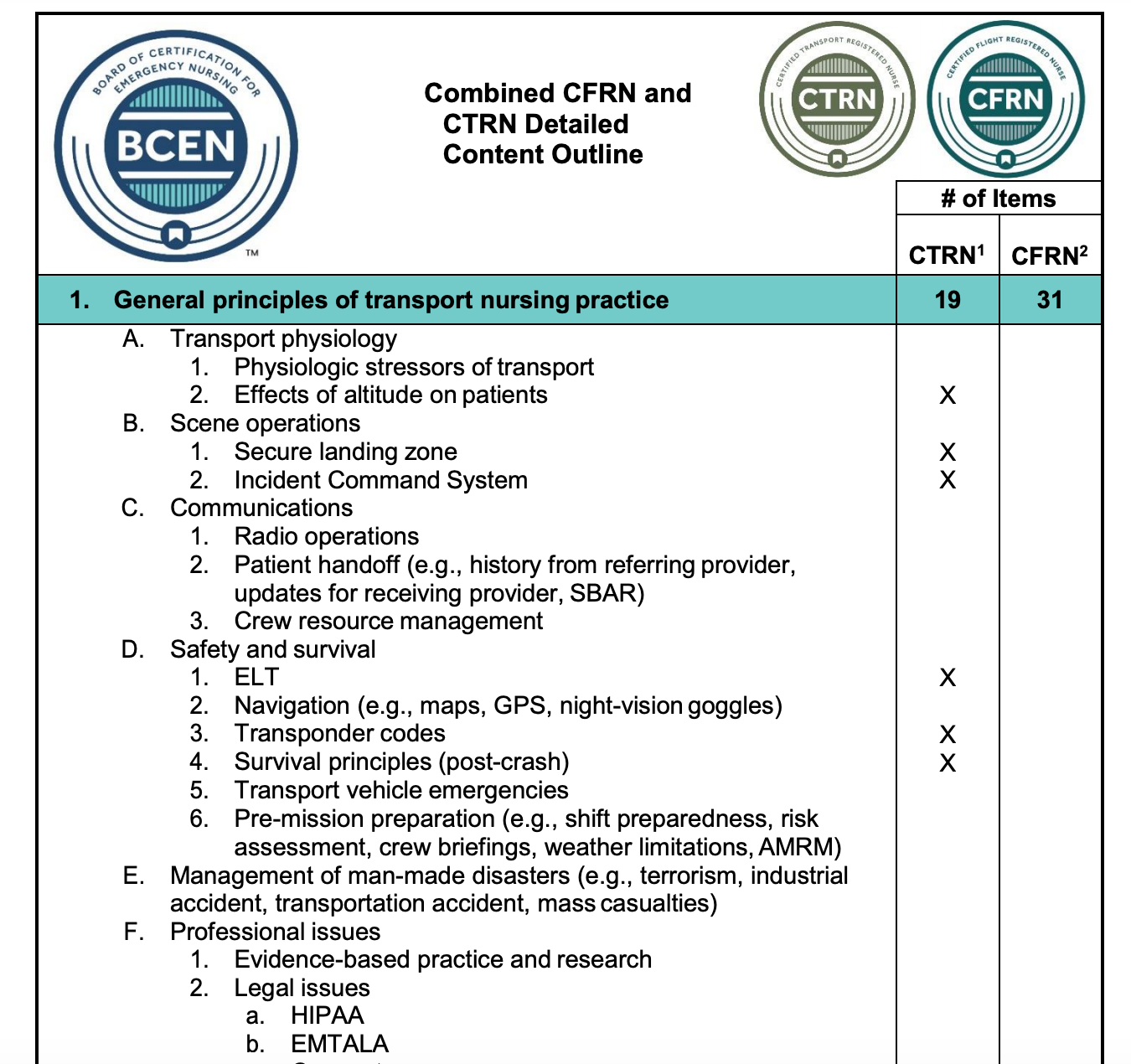
So before we move any further in the study resources I used for the tests I took (TCRN, CEN, CFRN, and the CPEN)… I recommend you look up the Content Outlines for the test you are planning to take. I did the work for you and attached the links below.
Using these outlines will allow you to plan out your study time and help you narrow your focus on topics of strength/weakness. Most formal study resources will use this outline to organize their plans.
How I Studied
Now you don’t have to take my word for gospel but this was was the best method I had found for studying effectively. Generally what I did was found an online program for the test I was taking, I looked at what the major topic was, and read chapters of whatever textbook I had bought to study from pertaining to those topics and take notes on the key subjects. Then I would listen to the lectures and fill in notes around my previous in a different color pen or start on a fresh page if there was something different. I made sure when I was taking my original notes during my readings that I left plenty of room for more notes or doodles. Alternatively, if my study program came with lecture handouts or power points, I would print those out and take notes on those instead of hand writing notes. Also, very helpful and saved my wrists!
Example: When I was studying for CFRN, if I knew I was going to listening to a lecture on “Airway Management” I would read the entire chapter on the subject, take my notes, then listen to Flight Bridge’s lecture on the subject and take additional notes or doodles.
After I did those two things, I would do questions on the subject to build on my knowledge base. This I found to be very important because it’s one thing to build a foundation but another to build the house on top. Answering questions allowed me to exercise my critical thinking skills which is what the exams seek to truly test. The more questions you answer, the better you can get at it. Ultimately, the brain is a muscle–you need to work it for it to get stronger!
I also am a huge believer in the see one, do one, teach one method. So my poor preceptor/flight partner was inundated with me bouncing concepts off him (God love you, Dan–this post is for you!) My husband who while he is an EMT, does not really do concepts we’re being tested on was also a great resource for me–he probably knows STEMI criteria better than many paramedic students in their cardiology rotations from me drilling him (Hey Chris–how many millimeters?!)
The CFRN (and by Extension the CTRN)
Ok, so at long-last, I will talk about the actual resources I used for the exams. The first I will discuss is the CFRN (and CTRN). The CFRN and CTRN are relatively the same exam with a few exceptions. The CTRN is shorter at 130 scored questions (plus an additional 25 un-scored questions). The CFRN is a bit lengthier at 150 questions (plus 30 un-scored questions). The CFRN covers flight physiology and aviation safety and operations whereas it is exempt in the CTRN. Otherwise the content is the same. I have not personally taken the CTRN, but I plan to Spring 2020 and will utilize the same programming as the CFRN minus the flight components.
Resources I Used:
- Patient Transport Principles and Practice, 5th Ed: If there was a CCT bible, I’m pretty sure this is it. My BCEN practice tests pretty much exclusively referred to this in my rationales. It is the ASTNA standards! Highly highly recommend! Get it here!
- ACE SAT: Great resource full of practice questions for the CFRN but also FP-C (for you medics who might be snooping on this post). Get it here.
- Back To Basics: Critical Care Transport Certification Review: I caution against using this exclusively as it is not comprehensive. There is some things missing but it is a great adjunct to your studying! Get it here.
Programs I Used:
- I used the FlightBridge ED program, package #2 for this exam. It came with 36 CE hours, multiple review quizzes at the end of each video module, a review test at the end, a review book, and was good for one year after purchase. I felt the content was very easy to understand and Eric Bauer is very approachable. He has good social media presence and encourages people to reach out with questions. Flightbridge has a conference yearly called FAST. Additionally, they have multiple podcasts with great insights. Finally, the good folks there also authored a fantastic book on ventilator management–it really broke down and demystified vents for me. You can find the review programs HERE.
- Pam Bartley is the “Passologist”. In addition to hosting multiple live courses, she also has a series of study guides for multiple exams. She includes review questions and key points guides and really hits all the highlights of the exam–she really nailed my CFRN exam. I’m pretty sure everything on her study guide was on my test! You can find her HERE. Or for live classes, check here!
Apps!!
- Not too many good apps out there, unfortunately… Surgical Nursing Reviews from Nursing Pearls on the Apple App Store had a purchasable add-on for the CFRN (1000 questions). I’m not going to lie–I did not find this worth the money. I’d save your time and money, guys.
- A really good resource though for clinical practice and for studying is called “Critical- Medical Guide” by The Barringer Group (I think this is Apple exclusive–sorry Android-ers). It is on its 15th version and is super up-to date. Great for critical care information, RSI dose calc, pediatric information, etc. It is pay to play–one time fee of 15$ but well worth it!
Useful Classes/Certifications:
- Neonatal Resuscitation/STABLE Program
- American Heart Association BLS/ACLS/PALS
- American Burn Society Advanced Burn Life Support
- Advanced Trauma Life Support (or Advanced Trauma Care for Nurses [ATCN])
- Emergency Nursing Pediatric Course
The CEN
So for the CEN, I actually had a live class! My hospital sponsored a live prep class through Jeff Solheim Enterprises. However, I will say it was excellent. I had used one of Jeff’s online modules for my TCRN and much like that, his representative teaching the live class did not disappoint.
Resources I Used:
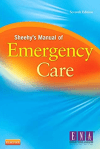
- Sheehy’s Manual of Emergency Care, 7th ed: If Patient Transport was the bible of CCT, Sheehy’s is the bible of ED care. It is hands down the best book I’ve found for this. Through my career, I have referred back to it time and again. Beyond just prepping for the CEN, I recommend it for any ER nurse as a reference. You can get it here.
- ENA CEN Review Manual, 5th ed: over a 1,000 questions plus 2 online tests. This book really simulates how questions are asked. I used an older edition but I recommend staying on top of the newer versions. Get it here.
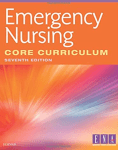
- ENA Emergency Nurse Core Curriculum, 7th ed: I consider this a very good review guide of the core concepts of emergency nursing. It doesn’t have the depth of Sheehy’s but breaks things down to the need to know for the test. Get it here.
Programs I RECOMMEND:
- So you’ll recall that I did a LIVE in-person class… not an online one. So if you’re looking for an online one, I have to tell you I did not use one myself for this test. I am recommending Jeff Solheim based on the fact that I used him for TCRN online and I used his live class for CEN.
- If you use his online class (here), it costs 150$ for a one year access. This is good for 17 CE hours with a 30-day satisfaction guarantee. He also offers a monthly access for 50$ a month. Depending on how fast you study or how long you need access for, a monthly fee could save you a lot of money. He also sells an entire prep manual on his website for 25$ (here). If live courses are more up your alley, here is a list of his dates. Jeff also has an APP and has a great social media presence– his Instagram often will post questions regarding the exams which is awesome for those moments you’re scrolling on the toilet (you nasty….).
- Again– I am throwing Pam Bartley up here with her excellent packages! (She also has live classes… check dates near you!)
Apps!!
- As stated about Jeff’s app.
- Pocket Prep is a great developer who makes prep programs for a variety of tests. The CEN prep was a great resource for questions when I was getting ready for the test. It had a ton of questions, gave me the ability to customize my practice tests depending on what content I wanted to study, gave me rationales and where my areas of weaknesses were. Its awesome, guys! Get it here!
Useful Classes/Certifications:
- Neonatal Resuscitation/STABLE Program
- American Heart Association BLS/ACLS/PALS
- American Burn Society Advanced Burn Life Support
- Advanced Trauma Life Support (or Advanced Trauma Care for Nurses [ATCN])
- Emergency Nursing Pediatric Course
CPEN
TCRN
BCEN Practice Tests
At time of this post (2020), BCEN has reduced the cost of the practice test in celebration of “Year of the Nurse”. Where the tests were previously 75$, they are currently 40$ and well worth every penny. Not only do they simulate the exact testing software you will see, they show you how you fare on the tests, show you rationales as well as the references for the rationales you are given. I have attached the links for each of the exams for your convenience.
CEN * CFRN/CTRN * CPEN * TCRN
So basically thats it! Thats the big secret to how I’ve done it. Really its just a bunch of read and apply. Obviously, this is just my experience. You may have other things that work for you. Try on a few things and see what works for you. I may be speaking completely out of turn for what works for you–thats ok! But hopefully I found a few jumping points for you to start.
Certification is awesome. It is not easy by any stretch of the imagination but the feeling of holding that printout after the test is amazing and when the package with your certificate comes in the mail a few weeks later and the awe washes over you again… there is nothing like it. You earned it.
Clear skies and tail winds, friends! Best of luck and as always, let me know if you have questions or requests!
Do you have any recommendations for resources? What worked for you? Drop a comment on this post to share your study techniques with your peers or share what programs or resources you liked!

 Patients will burn you despite you breaking your back for them. The pay will never equal the work some days. Lunches won’t come some days and your bladder will harden to that comparable to those weird frogs that hibernate for years in Australia (I pulled out that metaphor from somewhere…don’t @ me).


 Scrubs n' Sirens