A-B-C…LS, BLS…CFRN, CEN… L-M-N-O-P: Certification Alphabet Soup

Stephanie Suzadail, MSN, RN, PHRN, CFRN, CEN, TCRN, CPEN… sometimes I joke that if I spilled the box for Scrabble it would look less like a damn mess. But you know what–I earned every one of those letters. Through experience and trial and error I have figured out what works best for me to obtain my end result: specialty certification. Understandably, if I used every single abbreviation behind my name that I was entitled to, it would probably get me a bit of an eye-roll for being a bit of a peacock. However with that being said, certifications are important. They do demonstrate tangibly that you have the commitment to your role. While many are required by facilities as a contingency for employment, it is still something to be incredibly proud of– when you look at the 2019 statistics for the pass rates for the BCEN exams, 3/4 certifications had 58-59% pass rates with the TCRN having a 72% pass rate. These are not exactly easy tests, they require competency.

Don’t let that deter you though!  Because I’m going to walk you through how I prepared for my exams!  My caveat here is that everyone learns differently–understanding how YOU learn is the key to your success. If you are a visual learner, utilizing videos and pictures/graphics may be more beneficial than recorded lectures/podcasts much like if you thrive with auditory stimulation, those podcasts may be straight up your alley!

Screen Shot 2020-01-21 at 5.06.28 PM

“Fine Print”

Disclosures! Ok Some quick disclosures/disclaimers… I have no financial disclosures to report. I make recommendations on products or services I have used however I receive no compensation for my recommendations nor do I attest that these services or products are superior to any other products or services available on the market. Further, while at the time of writing this, I am affiliated with BCEN as a volunteer, understand that I do not speak on behalf OF BCEN (my opinions are my own) and BCEN does not in itself endorse specific products or services beyond those listed on their website.


How Do We Learn and How Does It Apply to the Exam?

Having taken multiple certification exams, I’ve worked out a system over the years. I usually read about the subject I’m going to study, listen to the lecture while taking notes, then drill questions over and over. Thats me! I need repetition and application.

Certification tests are not read and regurgitate geared towards testing your memorization. You need application. Consider Bloom’s Taxonomy…it starts with having the knowledge. We get this in school, through study, and experiences. We move on to comprehension and application— this is using what we’ve learned. But the higher tiers of learning are analysis (drawing connections between all the ideas), synthesis (being able to justify your rationales and decisions), and finally the ability to evaluate or make judgements about the value of ideas and items.


blooms_taxonomy

Why does this matter? Because it’ll show you HOW to learn. Much of your certification exam depends on what you already know, yes, but more on how you apply that knowledge. So for some, pounding facts, figures, pathology, pharmacology, and equations leaves them feeling lost. A good take away is to learn what you don’t know, learn it thoroughly, but then focus on applying it. And at the end of your studying, you can feel more confident in your ability to defend your knowledge— you built yourself from the ground up!

Do this by running through scenarios, case studies, and questions ad nauseam. You’ll feel vastly more prepared than just reading material alone.

BCEN also offers practice tests that closely replicate the testing environment you’ll be in— with added rationales and references! I highly recommend it!


Know What You’re Tested On!

I know… this seems pretty self-explanatory, right? But would you believe when I’ve asked, how many people have told me they haven’t looked at BCEN’s “Study and Prepare” sections? This is a great tool because you’ll find if you buy those practice tests I discussed previously, when you read through the rationales, you will often find that the rationale is cited and that reference is listed on their website!


Screen Shot 2020-02-03 at 6.45.43 PM


Example: I bought the CFRN practice test and got a question wrong about ventilation/flight physiology in a bariatric patient. I read the rationale and the citation was actually a text book I used to study! It listed the exact book, chapter, and page. I was lucky I bought that book to use as a prep because I checked their reference list. This leads me to believe their questions are based off the references provided.

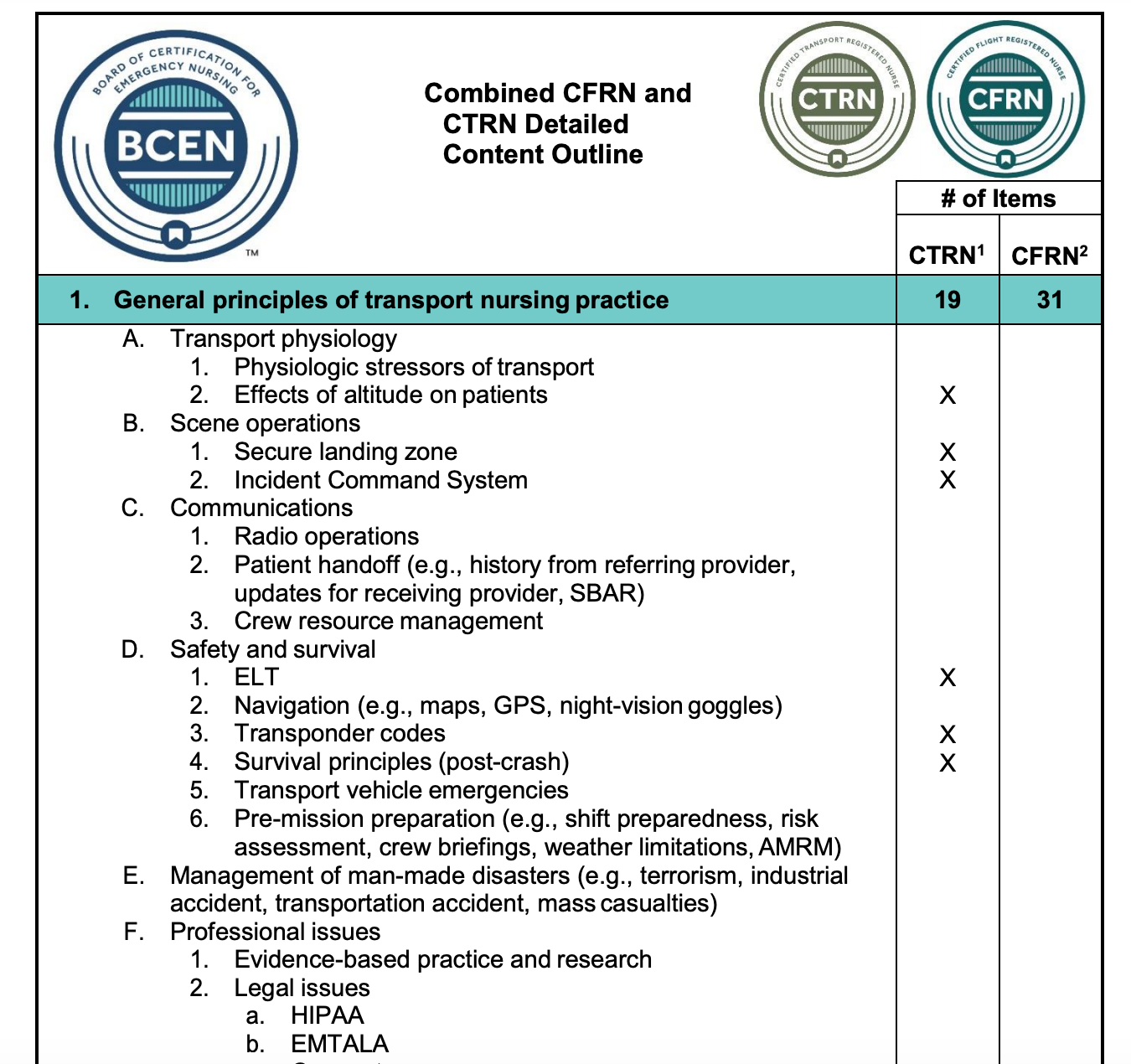
Additionally, if you’re not quite sure where to start studying, I recommend you utilize their Content Outlines! The organization quite literally gives you exactly what you will be tested on from topics and diagnoses, populations and procedures.


Screen Shot 2020-02-03 at 6.46.12 PM


So before we move any further in the study resources I used for the tests I took (TCRN, CEN, CFRN, and the CPEN)… I recommend you look up the Content Outlines for the test  you are planning to take. I did the work for you and attached the links below.

CEN * TCRN * CFRN / CTRN  * CPEN

Using these outlines will allow you to plan out your study time and help you narrow your focus on topics of strength/weakness. Most formal study resources will use this outline to organize their plans.


How I Studied

Now you don’t have to take my word for gospel but this was was the best method I had found for studying effectively. Generally what I did was found an online program for the test I was taking, I looked at what the major topic was, and read chapters of whatever textbook I had bought to study from pertaining to those topics and take notes on the key subjects. Then I would listen to the lectures and fill in notes around my previous in a different color pen or start on a fresh page if there was something different. I made sure when I was taking my original notes during my readings that I left plenty of room for more notes or doodles. Alternatively, if my study program came with lecture handouts or power points, I would print those out and take notes on those instead of hand writing notes. Also, very helpful and saved my wrists!

Example: When I was studying for CFRN, if I knew I was going to listening to a lecture on “Airway Management” I would read the entire chapter on the subject, take my notes, then listen to Flight Bridge’s lecture on the subject and take additional notes or doodles.

After I did those two things, I would do questions on the subject to build on my knowledge base. This I found to be very important because it’s one thing to build a foundation but another to build the house on top. Answering questions allowed me to  exercise my critical thinking skills which is what the exams seek to truly test. The more questions you  answer, the better you can get at it. Ultimately, the brain is a muscle–you need to work it for it to get stronger!

I also am a huge believer in the see one, do one, teach one method. So my poor preceptor/flight partner was inundated with me bouncing concepts off him (God love you, Dan–this post is for you!) My husband who while he is an EMT, does not really do concepts we’re being tested on was also a great resource for me–he probably knows STEMI criteria better than many paramedic students in their cardiology rotations from me drilling him (Hey Chris–how many millimeters?!)


The CFRN (and by Extension the CTRN)

Ok, so at long-last, I will talk about the actual resources I used for the exams. The first I will discuss is the CFRN (and CTRN). The CFRN and CTRN are relatively the same exam with a few exceptions. The CTRN is shorter at 130 scored questions (plus an additional 25 un-scored questions). The CFRN is a bit lengthier at 150 questions (plus 30 un-scored questions). The CFRN covers flight physiology and aviation safety and operations whereas it is exempt in the CTRN. Otherwise the content is the same. I have not personally taken the CTRN, but I plan to Spring 2020 and will utilize the same programming as the CFRN minus the flight components.

Resources I Used:

  • Patient Transport Principles and Practice, 5th Ed: If there was a CCT bible, I’m pretty sure this is it. My BCEN practice tests pretty much exclusively referred to this in my rationales. It is the ASTNA standards! Highly highly recommend! Get it here!
  • ACE SAT: Great resource full of practice questions for the CFRN but also FP-C (for you medics who might be snooping on this post). Get it here.
  • Back To Basics: Critical Care Transport Certification Review: I caution against using this exclusively as it is not comprehensive. There is some things missing but it is a great adjunct to your studying! Get it here.

Programs I Used:

  • I used the FlightBridge ED program, package #2 for this exam. It came with 36 CE hours, multiple review quizzes at the end of each video module, a review test at the end, a review book, and was good for one year after purchase. I felt the content was very easy to understand and Eric Bauer is very approachable. He has good social media presence and encourages people to reach out with questions. Flightbridge has a conference yearly called FAST. Additionally, they have multiple podcasts with great insights. Finally, the good folks there also authored a fantastic book on ventilator management–it really broke down and demystified vents for me. You can find the review programs HERE.
  • Pam Bartley is the “Passologist”. In addition to hosting multiple live courses, she also has a series of study guides for multiple exams. She includes review questions and key points guides and really hits all the highlights of the exam–she really nailed my CFRN exam. I’m pretty sure everything on her study guide was on my test! You can find her HERE. Or for live classes, check here!

Apps!!

  • Not too many good apps out there, unfortunately… Surgical Nursing Reviews from Nursing Pearls on the Apple App Store had a purchasable add-on for the CFRN (1000 questions). I’m not going to lie–I did not find this worth the money. I’d save your time and money, guys.
  • A really good resource though for clinical practice and for studying is called “Critical- Medical Guide” by The Barringer Group (I think this is Apple exclusive–sorry Android-ers). It is on its 15th version and is super up-to date. Great for critical care information, RSI dose calc, pediatric information, etc. It is pay to play–one time fee of 15$ but well worth it!

Useful Classes/Certifications:

  • Neonatal Resuscitation/STABLE Program
  • American Heart Association BLS/ACLS/PALS
  • American Burn Society Advanced Burn Life Support
  • Advanced Trauma Life Support (or Advanced Trauma Care for Nurses [ATCN])
  • Emergency Nursing Pediatric Course


The CEN

So for the CEN, I actually had a live class! My hospital sponsored a live prep class through Jeff Solheim Enterprises. However, I will say it was excellent. I had used one of Jeff’s online modules for my TCRN and much like that, his representative teaching the live class did not disappoint.

Resources I Used:

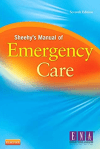
  • Sheehy’s Manual of Emergency Care, 7th ed: If Patient Transport was the bible of CCT, Sheehy’s is the bible of ED care. It is hands down the best book I’ve found for this. Through my career, I have referred back to it time and again. Beyond just prepping for the CEN, I recommend it for any ER nurse as a reference. You can get it here.
  • ENA CEN Review Manual, 5th ed: over a 1,000 questions plus 2 online tests. This book really simulates how questions are asked. I used an older edition but I recommend staying on top of the newer versions. Get it here.
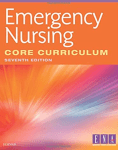
  • ENA Emergency Nurse Core Curriculum, 7th ed: I consider this a very good review guide of the core concepts of emergency nursing. It doesn’t have the depth of Sheehy’s but breaks things down to the need to know for the test. Get it here.

Programs I RECOMMEND:

  • So you’ll recall that I did a LIVE in-person class… not an online one. So if you’re looking for an online one, I have to tell you I did not use one myself for this test. I am recommending Jeff Solheim based on the fact that I used him for TCRN online and I used his live class for CEN.
  • If you use his online class (here), it costs 150$ for a one year access. This is good for 17 CE hours with a 30-day satisfaction guarantee. He also offers a monthly access for 50$ a month. Depending on how fast you study or how long you need access for, a monthly fee could save you a lot of money. He also sells an entire prep manual on his website for 25$ (here). If live courses are more up your alley, here is a list of his dates. Jeff also has an APP and has a great social media presence– his Instagram often will post questions regarding the exams which is awesome for those moments you’re scrolling on the toilet (you nasty….).
  • Again– I am throwing Pam Bartley up here with her excellent packages! (She also has live classes… check dates near you!)

Apps!!

  • As stated about Jeff’s app.
  • Pocket Prep is a great developer who makes prep programs for a variety of tests. The CEN prep was a great resource for questions when I was getting ready for the test. It had a ton of questions, gave me the ability to customize my practice tests depending on what content I wanted to study, gave me rationales and where my areas of weaknesses were. Its awesome, guys! Get it here!

Useful Classes/Certifications:

  • Neonatal Resuscitation/STABLE Program
  • American Heart Association BLS/ACLS/PALS
  • American Burn Society Advanced Burn Life Support
  • Advanced Trauma Life Support (or Advanced Trauma Care for Nurses [ATCN])
  • Emergency Nursing Pediatric Course


CPEN


TCRN


BCEN Practice Tests

At time of this post (2020), BCEN has reduced the cost of the practice test in celebration of “Year of the Nurse”. Where the tests were previously 75$, they are currently 40$ and well worth every penny. Not only do they simulate the exact testing software you will see, they show you how you fare on the tests, show you rationales as well as the references for the rationales you are given. I have attached the links for each of the exams for your convenience.

CEN * CFRN/CTRN * CPEN  * TCRN


So basically thats it! Thats the big secret to how I’ve done it. Really its just a bunch of read and apply. Obviously, this is just my experience. You may have other things that work for you. Try on a few things and see what works for you. I may be speaking completely out of turn for what works for you–thats ok! But hopefully I found a few jumping points for you to start.

Certification is awesome. It is not easy by any stretch of the imagination but the feeling of holding that printout after the test is amazing and when the package with your certificate comes in the mail a few weeks later and the awe washes over you again… there is nothing like it. You earned it.

Clear skies and tail winds, friends! Best of luck and as always, let me know if you have questions or requests!


Do you have any recommendations for resources? What worked for you? Drop a comment on this post to share your study techniques with your peers or share what programs or resources you liked!


So, You Wanna Be A Flight Nurse: The Sequel.

Scene: “The Interview”

So if you’re here, it’s for one of a few reasons…

  1. You read my first blog post “So You Wanna Be A Flight Nurse?” where I outlined my journey from start to “finish” of getting into a flight suit with “Flight Nurse” on my badge.
  2. You were driven here by my Instagram account @Pyrovixi where I share my career, my love of travel, my dogs, occasionally the man who puts up with my crap and feeds me (shout out to Chris!), and overall live the fabulous life of an InstaCeleb (at least I play one on TV).
  3. A search engine deposited you in my tender loving care because you scored your first (or fifth) flight nurse interview and you wanted to prepare for it. I relate–I googled “Flight Nurse Interview” once and didn’t come up with anything specific.

Well… welcome. I’m glad you’re here. Make yourself at home. I’d offer you a drink but well this is the internet and my jokes are tired AF to be honest. Scoring your interview was a huge obstacle to overcome and regardless of your outcome you need to be very proud of that fact. Not only did you meet the requirements to be entertained but you slayed the human resource’s beast guarding the gates of your future. I cannot tell you how many bright and high-potential people I’ve seen be weeded out because of clerical errors and automated systems. So you did well! Moment of silence for you to bask in that awesomeness!

So before I get into the meat and potatoes (or salad and vegan alternative meats for my plant-based friends) of the matter, I want to make sure I am transparent. I am by no means an expert in human resources, flight nursing, or really ANYTHING. I have been successful in life by a series of trial and error situations, good networking, persistance in the face of adversity, and by continued education. My nursing career is still young (at the time of writing this I have been a nurse for just under 6 years and a flight nurse just over a year). But I have the wisdom bestowed upon me by those who are much more experienced than me that I want to pay forward as well as my own personal experiences. Do not feel obligated to take my word as the end-all-be-all and use your own judgement when evaluating my statements.

In this post, I also may offer some tips that come off super commonsense for interviewing but when you read articles about interviewing, evaluators will states that the most commonsense things will often be the most overlooked by interviewees. Further, it’s not meant to sound redundant but act as simple reminders before you go in. Hopefully there are some new things you take out of this!

I think I’ve done enough prefacing. Let’s jump in!


Screen Shot 2020-01-20 at 10.11.27 PM


Do Your Research Before the Interview!

You probably know about the agency you applied to. You may have a friend who works for them or have heard about them in the media or seen them on Facebook. However, did you take a few moments to scroll through their “About” page on their website? If you were asked “what is ABC Med Flight’s mission statement and can you discuss their values?” would you be able to talk about it? If not, you were underprepared. It really is important to understand the meaning of the work you say you want to do when you’re pleading your case to your interviewers. Incorporating their buzzwords into your interviewer shows you align with their end goals and make you more marketable. I try to look for these things before I interview so that I look like a candidate that will mesh with the company.

I also like to try to know a tiny excerpt of history about the agency as well as their current status. These are all usually searchable online. A lot of agencies post their service areas on-line and well as the background of their company.

If you know someone in the agency, ask them about their interviews. It’s not really some big industry secret. One interview I went to was an interview followed by a medical simulation then a trauma simulation. Another was a basic knowledge assessment followed by an interview then if you did well a second interview where you completed a simulation with the leadership team. So knowing what you are walking into can help you leaps and bounds. Interviewers may tell you upfront what to expect but it never hurts to ask. I know I helped someone in our agency by telling him about my experience. Depending on the agency’s policies, you may be able to get a copy of their protocols to help you prepare for your interview.

Take a Moment for Self Reflection–Before You’re Put On The Spot.

Interviewers are going to be curious about how you handle things and who you are. Your resume gives them your certificates and your job history but no real insight on the personal growth factor those things entailed. So sit down and brain storm the following:

  1. What are your strengths? I personally like to avoid “I’m really nice!” Well that is important please don’t get me wrong but nice doesn’t save people, to be blunt. No one ever came back from a trauma arrest because we told them they had a nice smile. I usually encourage people to focus on their abilities to adapt to change. The critical care transport environment is one where patients just REFUSE to stay nice and stable (how rude!). However it’s also the weather, wildlife, bystanders, the spinning rotor blades of death we motor around in, other healthcare workers, and a million other factors that throw wrenches into our cogs and we need to be able to continue to function around these. But it isn’t just on flights. You need to have the ability to adapt with the changes in medicine–I know since I’ve started, I’ve seen a great deal of change in my program. I’m proud to say I was around for the implementation of the blood program but it was a challenge. The requirements are never static and thus, neither should we be. So when you’re laying out your strengths consider what would benefit the company, the patient and their families, your new coworkers, and the agencies we will be working with (EMS/Fire/Rescue/Police and other hospitals): critical thinking, assertiveness, enthusiasm/drive, reliability, and customer service. The final thing I really want to emphasize is this: if it isn’t a strength already make it one… ATTENTION TO SAFETY. Aviation has inherent dangers that we make every attempt to mitigate through our combined efforts of many individuals. It requires consistent vigilance and complacency can kill you and if it hasn’t yet it will eventually. Every few weeks we hear reports about another aviation mishap so having a respect for safety is a foundation strength; I don’t say this to scare you away because many companies have strong emphasis on safety (I recommend you check out the ECHO Heliops Community if you’re curious about aviation and safety–if the agency you’re interested in is on their radar, you may want to re-evaluate your options).
  2. What are your weakness? I think everyone is pretty wary of talking about these. I mean, who really wants a light shown on their shortcomings? We all want to be picture perfect people performing perfectly. However I really encourage you to admit these! It shows you have good self-awareness but also humility. Arrogant people are dangerous–if you know everything, you are less receptive to other’s input and in critical care transport that is a recipe for absolute disaster. So you came up with some weaknesses (“I lack neonatal experience; I’m no confident with obstetrics; I didn’t see a lot of ventilators”) and are probably thinking that will disqualify you. I want to reassure you that very few people without flight experience come 100% prepared and flight programs have training plans to address this. So be transparent and tell your interviewers–it isn’t a personality flaw and is a workable issue. I also recommend that you follow up every weakness with a proposed plan to tackle it. So going into the interview for this job,  I knew my weaknesses and explained that I planned to do more studying on the topics, listen to podcasts, and asked to shadow on units pertaining to that subject. I was actually surprised to learn it was part of my orientation anyway. So own your weaknesses!
  3. Remember a time when you were challenged as a nurse (this one I usually try to think of a complex pathology, a difficult family member, a coworker with an ethical issue, how I overcame a personal struggle with an emotionally taxing patient, how I worked without enough resources). Use this question to demonstrate your ability to be resilient and creative. It is a question they use to assess your ability to handle stress and overcome using your intellect.
  4. If you noticed a coworker was tired or came to work smelling like alcohol or was diverting narcotics or any form of this question… always reflect on how this would affect the safety of the crew. See rambling discussion above about safety. If anything ever puts you, your crew mates, your patient in any danger, err on the side of safety: speak up, cease the action, intervene if necessary, and if all else fails, involve your leadership. And after your interview: remember these things, don’t just say it and forget it!
  5. Why do you want to do this? Awww! This is my favorite and maybe it is because I’m not all salty and burnt out yet but my reasons bring tears to my eyes. If your reasons don’t move your soul and/or inspire and excite you, perhaps you have the wrong reasons. I really, really, really stress this: DO NOT say because it would be cool to wear a flight suit and fly in a helicopter. We all know that haha. But it is a vapid reason. Too many times I get sweet little nursing students who message me about this and say how they want to wear a flight suit or be a flight nurse so they could putz around in The Bird©. Focus on your personal growth/new challenge, the working with the sickest patients, join a team of like-minded/education-aggressive individuals… Think outside the box because there are probably three more applicants with the same reasons as you–make yours memorable.

Have Questions Prepared for Your Interviewers!

At the end of interviews, applicants are asked “Do you have any questions?” This is your chance to get them asked. In the days or weeks leading up to your interview, think up everything you want to know about the job. How do the shifts work, what happens if pilots/crew members call off (are you moved to another base?), what opportunities are there for public outreach or education, does this agency participate in mission trips or disaster quick response, are there opportunities to assist with projects in the agency, or are there any research projects the company is participating in? What do a majority of their calls consist of? Medical/trauma, adult/ped, scene flight/interfacility transport?

Don’t be afraid to ask about their safety practices. Do they participate in “3 to go, 1 to say no” practices? Do they operate at FAA weather minimums or do they have more rigorous standards? Do they offer safety and survival training? How is their safety record? What are they doing to ensure the safest practices for their crews and patients? (Dual engine helicopters, night vision goggles, flight tracking softwares).

But most importantly, ask if they are CAMTS accredited. If they are, are they expecting to? How do they ensure staff are maintaining CAMTS mandated proficiencies? How does their education work? What do they do to ensure staff are staying up to date with the the changes in medicine?

Write your questions down as they come up. Some may answer themselves in your interview but at least you show you’re interested! Do not skimp on asking about safety–its a hot topic in aviation and if your interviewers seem shy about it, that should be a red flag to you. Transparent, safety conscious companies will be up front with you about their practices.

Medical Knowledge: Some Things You May Want to Know

I’m going to through some things up here but ultimately flight systems can vary so much I can not give you a comprehensive prep list. My recommendation is you check out the Board of Certification of Emergency Nursing’s Content Outline for the Certified Flight Registered Nurse because its a very good list of major topics we encounter.

My recommendations:

  • STEMIs (Inferior/Posterior) and Rhythm Interpretation/Management
  • Strokes (ICH/CVA, BP Management)
  • Sepsis
  • High-Risk Obstetrics (Use of Magnesium)
  • Trauma Management
  • Know your state EMS protocols–usually accessible online
  • Come being able to do dosage calculation, calculate drip rates… good refresher here and here!

I recommend this great app if you’re looking to grow your knowledge of critical care–it is called CRITICAL and does cost money to use but it is well worth its weight in gold. I currently could only find it for Iphones so I apologize for Android users.

app-store-logo@2x

DOOMSDAY! Just Kidding: Day of The Interview

So by now you know what to wear to these things, so I’ll save the talk on that 🙂

However some little things that get looked over are the following:

  • Eat a light breakfast or lunch–enough to satisfy any hunger and ward off any stomach growls/sugar crashes but not enough that you may have to consider a bathroom break during your interview or leaves you in a brain fog (remember going to class after a carb-heavy lunch?)
  • Show up 10-15 minutes early.
  • Have at least 5 copies of your resume printed, one side only on decent paper (they have the electronic format but I’ve been complimented many times on my preparedness and thoughtfulness).
  • Bring a note pad and pen with you to take notes.
  • Start the day with positive thoughts and if you can remind yourself to, smile throughout the day–there are a lot of studies that show that it sets you up for a better mood.
  • Immediately before your interview try to take a series of deep breaths, clear your mind of the possibility of not being successful, and relax your shoulders.

In The Interview

This is it! Dun dun duuuuunnnnnnnn. So now that you’ve done all the prep, spit out your gum (before you got there, obviously), ditched your coffee, and brought your resumes you enter the Chamber of Destiny (any fantasy fans out there?)

Likely the individual retrieving you will introduce you to the group. However, make sure when you first speak, it is to introduce yourself. Remember to greet every interviewer with a handshake, making eye contact, and thank them for their time. This is your opportunity to offer copies of your resume but don’t be offended if they decline, they may have one already. If they don’t, provide one. Then you can refer to items on it throughout your interview and they have a small reminder of your existence at the end of the day after they conclude other interviews.

As you speak, sweep your eyes across your interviewers and be sure to smile. If you’re on a phone interview, remember to smile! It sounds cheesy but your voice changes when you don’t and it can make you sound more approachable and relaxed. Try to commit their names to memory and if you answer a question one has asked you, try to start your answer with their name. Example, the female interviewer is named Karen (because they are always Karen, am I right?!) and she asked about your last job: “I’m glad you asked, Karen….” This also prompts me to say: while it isn’t unreasonable to identify weaknesses your last job may have had, I would avoid condemning it or sounding condescending about it. There is a way to frame these things politically correct so always come out on the high road– interviewers may be made to thought “if they talked about their old job this way, how will they talk about us?”

You’ve prepared the hard self-reflection questions already so those should be easy by now! Highlight that you can operate alone and as a team mate. Make sure you discuss how you feel confident in your knowledge but also realize you have a lot to learn, recognize that you don’t know what you don’t know but know how to utilize your resources (protocols, experience, partners, other agency providers) and your medical command. It shows you’re competent and confident as a provider but also humble and not a cowboy. Be willing to learn, willing to help. Also willing to stand by to decisions when it comes to safety—- that is HUGE in aviation. Safety of the crew is 100%.

Something that came up for me that tricked me up was the question “Who are our customers?” Well of course they’re our patients! Right? Yes and no. We also have to consider the facilities we go into and work with. In my interview I literally felt so goofy–of course! Bad interactions with other facilities reflects poorly on the whole organization. My director said it best and it has stuck with me since–the flight suit represents quality and we have to always be aware that people expect that (paraphrased). Hospitals have the ability to call other flight services or ground services (some places don’t have many because they are rural but still) but they make a choice to use yours; this is not something we should take lightly. Losing the trust of a facility means we may not go back. It may mean utilization of another flight service who may not be as good or may be more expensive and consider how that may effect our patients but also, its not good for our company’s bottomline. While I don’t like to think about making money off of sick people I also recognize the reality that we operate and have the ability to do so because we can afford to.

So now you have the opportunity to wrap up the loose ends of the interview! Make sure you clarify anything you might have said that might have you cringing now (example: I once said something about working with new grad nurses… it wasn’t that I disliked them and when I was talking later, I realized the context was lacking when I discussed it earlier. I’m glad I circled back because the impression the original statement left was not the one I intended). Ask the questions you prepared. And finally, ask for business cards!!! If they do not have them, ask if they would be willing to provide emails for follow-up questions.

Again shake the hand of every interviewer for their time and consideration, looking them in the eye with a smile. I like to throw the “I hope the next time we meet is when I am beginning my training but regardless I appreciate the opportunity to have been here today.” I think conveying confidence and excitement/hope with being realistic and grateful is a good blend of human emotion and social interaction.

After The Interview

Alright! Go you! Not only did you survive the interview, you survived 3,340 words of this blog post (:

Now is the time to relax and reflect. Every interview is potentially practice for the next. What went well? What didn’t? File it away. We always hope we’ll never need to interview again because we got our dream job but approaching this with realism is tactful and responsible. Interviewing is a skill and like any other skill, it requires practice. I know I was cruddy at foley catheters for a long time but eventually I hit the right hole! Interviewing is kind of like that–eventually you kind of just fall into the right hole.

Within 24-hours, I recommend pulling out those business cards or the list of emails and composing thank you emails. Generally I like to take the opportunity to highlight the major key points of the interview, reiterate why I feel I am a good fit for the position, as well as include any things I may have forgot to mention and other questions I might have had. Conclude with a thank you for the time the interviewers provided and another statement that you will hope to speak to them again moving forward.

Now hurry up and wait, ya’ll!


Screen Shot 2020-01-21 at 12.36.31 AM


If you’re applying for a flight job, chances are you have a few interviews under your belt. And realistically, you probably had this all on your own if you were out researching how to prepare–because the kind of people who get hired and thrive in flight are the types who want to be the best and put in effort.


Finally I want to end my post with a quote posted in our base:

LIVE YOUR INTERVIEW

DO WHAT YOU SAID YOU WOULD

It’s one thing to say all the right things but just make sure you follow through–our work matters and people will look differently at you when the flight suit goes on. Be cognizant and never forget what you said.

Clear skies and tail winds, friends!


Did you use this blog to get a flight job? Please leave a comment if you used this post in an interview and how your interview went! I am vested in the success of future flight nurses and would love to continue to develop this for future readers. Suggestions and honest feed back is greatly welcomed.


So, You Wanna Be A Flight Nurse?

IMG_6707.JPG

One of the most common questions I get on my Instagram is “I wanna be a flight nurse but don’t know where to start! What do you recommend?”

Well let me start by saying– there is no one clearcut path and the path is a different one from state-to-state. But don’t let this deter you from continuing to read!

If you read my “About the Blogger” page–you’ll see that my own path was a winding, treacherous one with little guidance but my own dreams and aspirations. That is step one–set your goal. So already you’re own your way to joining the flight community by simply identifying your own dreams.

“Ok Steph…great…super helpful…” I hear you cry.

But quite honestly, it is the truth. I wouldn’t have gotten here without understanding my passion and keeping that end goal firmly in sight. The way is not easy–as it shouldn’t be. You’ll need that dream to motivate you through the journey.

So to start– flight nursing is generally guided by standards set by our regulating/certifying body “the Commission on Accreditation of Medical Transport Systems” or CAMTS (pronounced “cames”). This body accredits critical care transports to ensure patient safety and high-level patient care. It is an umbrella organization that really actually has representatives from a multitude of different organizations such as the Air and Surface Transport Nurses Association, the American College of Surgeons, the National Association of EMS Physicians, the International Association of Flight & Critical Care Paramedics, and the American Association of Critical Care Nurses (plus more not listed). While accreditation by CAMTS is strictly voluntary, many governmental regulating agencies require participation (with good reason!)

As a participant of CAMTS, many helicopter emergency medical services (HEMS) agencies require their crews to maintain competencies in a myriad of different subjects, advanced certification, and a minimal amount of years of experience.

You Can’t Just Jump Right In

“But why?! I always wanted to be a flight nurse/paramedic–can’t I just graduate school and start right away in the field?”

Consider the role of the flight nurse/paramedic–you and one other person are responsible for the life of the sickest or most injured people. You operate based on past experience and your own knowledge base in a small, confined space of an ambulance or helicopter without the oversight of a physician at your immediate disposal. You operate relatively autonomously (based on set protocol sets for your organization) and lack the resources normally found in a hospital.

One such call reminded me of this fact– after retrieving a newly intubated patient who was a difficult one to ventilate, required a great deal of sedation, and simply put was a hot-mess express of a human, our helicopter threw warning lights. We had to be transported with this patient from the confines of the referring hospital to an air field at a remote site, in the pitch black of night, with this patient. And when our helicopter threw warning lights, we were grounded and couldn’t launch. Meanwhile, we were running out of meds to keep this patient sedated, his fever broke causing him to sweat out his one IV site access, we had no lights but our flashlights, and just the two of us in a small space (pretty sure we were stepping all over each other). I was blessed to have a partner with experience as we attempted to secure more IV access, keep him sedated and titrated his ventilator settings while we awaited another helicopter to retrieve us. Then came the circus of transferring our gear and the patient through a muddy field (still pitch black) into a running helicopter (while keeping the patient under sedation/ventilated) AND making sure one of the lovely first responders who stayed with us didn’t wander into the spinning tail rotor blades of death.

It made me miss the bright lights, multiple staff members, and roominess of my ER rooms (never will I whine about the lack of space in them again!) Because in those situations, you don’t have all that to back you up–hence why you NEED to be competent and experienced.

Respiratory therapy? Thats me. Decision-maker during a code? Thats me. You don’t have your ancillary services readily available. Your physician is miles and miles away via radio–you are their hands, their ears, and their eyes.

What Should I Expect to Get to Qualify?

Still interested? Of course you are! Because in addition to operating at the highest level of your license…well to put it bluntly–this job is freaking cool!!

So what does it take to be a flight nurse? It varies from flight service to flight service but you should expect these (at least):

  • 3-5 years of critical care experience (ICU or ED)
  • Basic Life Support (BLS)
  • Advanced Life Support (ACLS)
  • Pediatric Advanced Life Support (PALS)
  • Neonatal Resuscitation Program (NRP)
  • Trauma Certification (ITLS, PHTLS, ATCN)
  • Advanced Certification (CCRN, CEN, or CFRN, etc)
  • Prehospital licensure (varies state to state, contact your state’s EMS regulatory agency for more information on this– Pennsylvania requires non-EMT RN’s to take a “Pre-hospital Registered Nurse (PHRN)” program prior to testing or if an EMT already, the RN to challenge the “National Registry Paramedic Cognitive” exam)

Many of you already out and working, probably have some of these or can get them through your hospital. Others (like me) have to go out and find these.

It Came at a Cost, Though

One secret I’m going to tell you though: it was expensive for me to get qualified. While I had BLS, ACLS, and PALs as job requirements for the ED… I had to go out and find the rest.

Being an EMT, I challenged the paramedic cognitive–this cost me about 200$ whereas had I gone through the PHRN prep program at a local community-college, it would’ve cost me $1,500 and 7-8 months of class time. (More on this later)

Neonatal Resuscitation Program cost me about 75$ even though it was offered through my hospital. Depending on where you take this, it can go upwards of 100-200$.

Advanced Trauma Care in Nursing (ATCN) cost me another 250-275$ (add on the additional almost 300$ I paid to become an instructor after being identified as an “instructor candidate”–unless you get chosen for this and wish to obtain it, don’t worry about this added cost.)

In addition, I bulked up my resume with Advanced Burn Life Support (ABLS), Tactical Combat Casualty Care (TCCC), Advanced Stroke Life Support (ASLS), and other trauma courses above and beyond what the minimums were.

Flight programs also lean heavily on bachelors of science in nursing degrees–you either need to already have it, be working on it, or obtain it within a certain amount of years.

So What Did I Do and What Do I Recommend?

Another question I frequently get is “should I do this or that?”

Let me start with my journey and what worked or didn’t work for me before I give my recommendations.

As I noted in my “About the Blogger” page of my blog– I started in BLS EMS back in 2007. Finished my BSN in 2014 and entered into a community Adult ICU. This ICU had its share of ventilators and drips but generally speaking, anything of high acuity was shipped out to the larger tertiary care center not far away. I was frequently assigned between the ICU and stepdown unit (stepdown more often than ICU) or floated to the medical/surgical floors to work as an aide. I quickly tired of this and sought after a position in a busy emergency department closer to home.

I worked in the ED for four years before getting interviews for flight services. I often gravitated more towards the critical/trauma bays and found myself super frustrated with the urgent care level patients–I craved the ability to use my critical thinking and to handle the sickest patients.

April 2016, I obtained my Trauma Certified Registered Nurse certification from the Board of Certification of Emergency Nurses and March 2018, I obtained my Certified Emergency Nurse certification.

I challenged the paramedic cognitive after self-studying and passed.

I entertained two offers for flight services and accepted one closer to home and began my orientation in October 2018.

What I quickly realized in my orientation: I’m not the hot shot I thought!

While I saved money and felt I was ready to undertake the PHRN role–I found that not taking the PHRN prep class put me behind. I had to learn all the State ALS/Critical Care protocols in addition to my service’s protocols. I had no experience in airway management beyond manakins and theory whereas my colleagues who prep-classed had clinical time through their programs.

Recommendation: regardless of your experience, take the prep class and take it seriously.

Further, while the emergency department gave me broad experience with all ages (womb to tomb if you will), I lacked a great deal of critical care experience that my ICU-level colleagues possessed. I did have more experience with initial stabilization and emergency care which serves me well on scene-calls but when a majority of your transports are interfacility, ICU-level patients, you feel this lack of experience.

Recommendation: If you wish to pursue a career in the ED–great! But be prepared for a steep learning curve. Take advantage of having all age groups. However, I strongly recommend time in a major ICU in neuro or cardiac specialities. This gives you a better jump off point for you to pull experiences from. If you can swing it in your life–DO BOTH! ICUs generally specialize in certain ages, so you don’t get the experience of neonatal or pediatric in the adult ICU and vice versa. In hindsight, I wish I had more ICU experience.

So the Wrap-Up

If you’re interested in flying…reach out to organizations in your area and schedule fly-alongs. Ask the crews there “what do you recommend?” I’m one flight nurse and my journey has been one of many avenues you could follow. They often can help you figure out how to get your prehospital certification, guide you to what their programs look for, and is a great opportunity in general to just make sure you can handle flying!

Flight medicine for me has been the most challenging and rewarding adventure I’ve ever had. I’ve felt elated at the sensation of flight, the satisfaction in saving a life, and the camaraderie of working with the greatest nurses and paramedics in the field. But I’ve come home broken and questioning my place here. It is like that whole first year of nursing all over again. I wouldn’t change it though. It’s been a beautiful adventure.


So welcome you future flight nurses–can’t wait to see you in the skies. Feel free to reach out to me with any questions you might have.

Clear skies and tail winds!