Three Years, a Dream, and a Flight Suit: Why That Might Not Be Enough

By someone who’s been doing this long enough to know better

Let’s set the scene: you’ve got three years in critical care under your belt. Maybe you’re a paramedic who can RSI in your sleep or an ICU nurse who can titrate five drips with one hand while eating cold pizza with the other. You’ve memorized the CAMTS requirements, passed your CFRN (maybe), and your Google search history is full of things like “how to not puke in a helicopter.

You’re ready to fly, right?

Well… slow your rotor wash, baby nurse.

Three years of experience is no joke. That’s a solid foundation. But it doesn’t mean you’re fully baked yet. And in flight medicine, undercooked can get spicy real fast. There’s a reason why a lot of flight teams quietly prefer five or more years, even if the brochure says three. That extra time matters, and it’s not just because we’re gatekeeping the cool jackets.

Let’s Talk About the Unicorn Myth

You know the one. The myth that once you hit three years, you’re ready to slap on a flight suit and start saving lives from 2,000 feet in the air like a stethoscope-wielding superhero.

But flight nursing isn’t just ICU or EMS in the sky. It’s ICU plus ER plus trauma bay, plus resource nurse, social worker, and tech support—sometimes all at once—while flying through turbulence and listening to your pilot talk about wind vectors like it’s a normal Tuesday.

The Research Is In, Y’all

According to a 2022 CFRN Pulse Survey, over 35% of flight nurses have more than 10 years of experience. That’s not by accident. Those extra years mean more reps with sick patients, more bad calls under your belt, more creative cursing during equipment failures, and most importantly, better judgment when things go sideways mid-flight (which they do).

A study in PMC also found that more experienced nurses tend to have higher “compassion satisfaction.” Translation? They’re less likely to lose it when their vent fails, their partner is stress-eating almonds, and their patient’s BP is circling the drain at 2,500 feet.

Now Enter: Maturity

I know, I know…nobody likes being told “you just need to be a little older.” But here’s the deal: age equals perspective. And flight nursing requires the kind of emotional intelligence that only comes from years of experience and probably a few existential crises. You need to be the calmest one in the aircraft while your partner’s troubleshooting a dying IV, your pilot’s yelling about airspace restrictions, and your patient is suddenly bleeding again from a place you already bandaged.

Let’s be honest, maturity also helps you not panic when your patient is crashing and your monitor screen goes dark, and the only thing you hear is the faint beep of your own stress response.

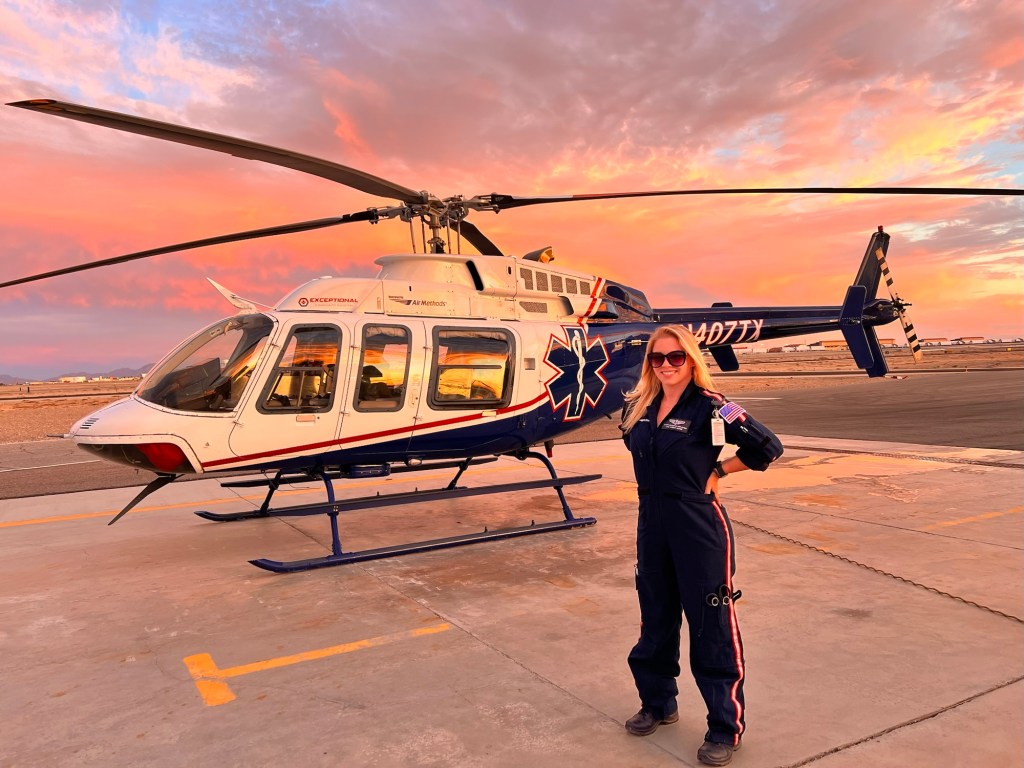
First Day of Flight, 2018

Personal Growth: A Seven-Year Transformation

I started this journey at 28, full of energy and ambition. Now, seven years later, I look back and barely recognize that version of myself. The experiences, challenges, and yes, even the mistakes, have shaped me into a completely different nurse and person. It’s not just about accumulating years—it’s about the growth that comes with them.

Interestingly, research backs this up. Developmental psychology studies suggest that people often experience significant shifts in perspective, emotional regulation, and decision-making every five to seven years. In a high-stakes environment like flight medicine, those changes can be the difference between reacting and responding.

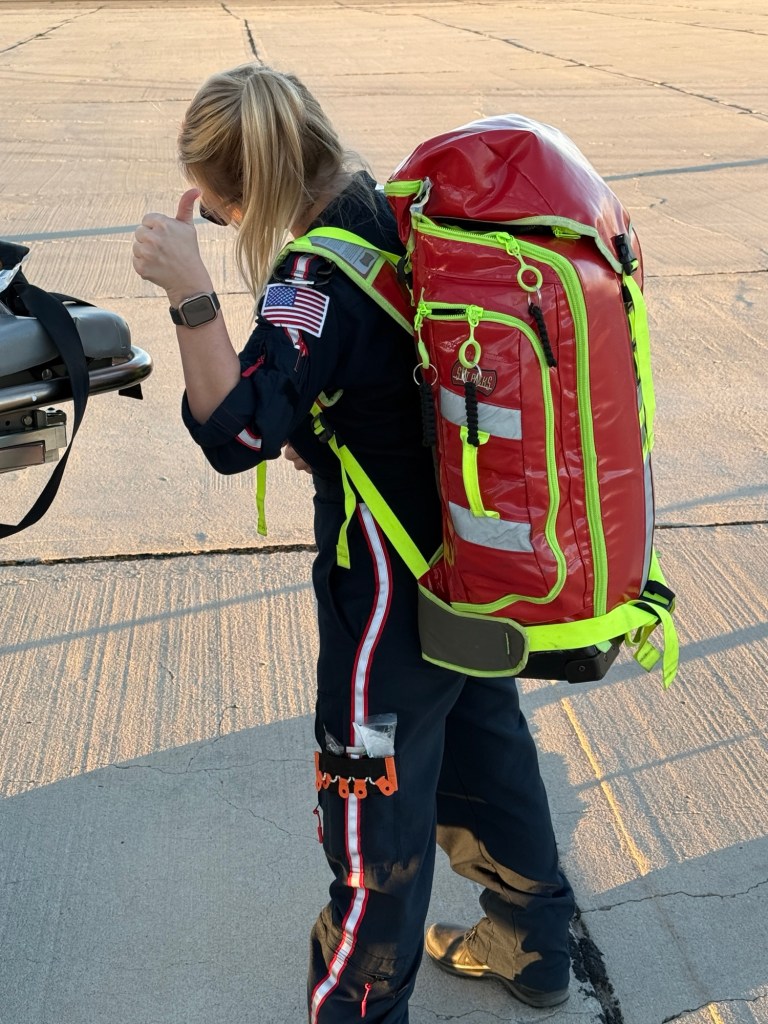
Year Six(ish), 2024

Bottom Line: It’s Not About “More Time to Wait.” It’s About More Time to Prepare.

Three years will get your foot in the door. But taking a little more time—whether that means another couple years in the unit, more variety in your calls, or just letting your prefrontal cortex finish cooking—isn’t a punishment. It’s a favor to future you. The one who’ll be flying at night in winter with a hypotensive trauma patient, a rookie pilot, and a med bag that’s somehow missing the Doppler.

If you’re at year three and ready to go? Hell yes. Chase the dream. But go in with your eyes wide open and your ego checked. Because this job doesn’t just demand skill. It demands grit, grace under pressure, and a little seasoning.

And if you’re already flying with “just” three years under your belt? That’s okay too. Just know it’s not about having enough time. It’s about making that time count.

And hey—at least now you know to bring your own snacks. Nobody tells you that part in orientation. Or what to wear under your flight suit. Or that you better figure out your hydration strategy, because once you’re in the aircraft, you’re not peeing until you’re back on the ground.

(Flight nursing: where your bladder learns discipline right alongside your brain.)

-Clear Skies and Tail Winds

Are We Misremembering or Is It Easier to Get into Flight Nursing Now?

Spoiler: It’s not just you.

I remember when getting into flight nursing felt like chasing a unicorn while carrying a 12-lead and an arterial line setup. It was the elite club of critical care, the badge of honor you earned after years in the trenches, a hundred code browns, and more night shifts than the moon. You needed ICU cred, trauma street smarts, the ability to start an IV in the dark (with turbulence), and preferably a personality that didn’t crack under pressure, or in the co-pilot’s seat.

Now? Blink twice and someone’s in a flight suit with just the minimum required experience and a freshly laminated NRP card.

What. Is. Happening.

Okay, let’s talk about the pandemic-shaped elephant in the room. COVID didn’t just shake the snow globe, it shattered the whole thing. Healthcare was gutted, burned out, stretched thin, and then duct-taped together again. Experienced nurses left in droves, either because they couldn’t take another shift in PPE or they realized their lives were worth more than their paychecks (wild concept, right?). And just like that, the flight industry, already a small, specialized corner of nursing, was desperate.

Enter: lowered barriers. Don’t get me wrong, some of the newer folks coming in are absolutely incredible. Passionate, smart, adaptable. But the truth is, the bench just isn’t as deep anymore. So programs that once required five years of ICU, a resume written in Latin, and a letter of recommendation from the ghost of Florence Nightingale are now hiring with, well, let’s just say a little more flexibility.

Orientation programs got longer. Clinical ride time got shorter. Preceptors are working overtime trying to build experience that normally takes years because it has to happen now. And while this isn’t about blaming individuals (again, a lot of these nurses are stepping up big time), it’s worth asking: what does this mean for safety, patient outcomes, and the long-term health of the flight community?

Honestly? It’s a mixed bag.

On one hand, the door being slightly more open is awesome for motivated nurses who’ve dreamed of flying but didn’t want to wait a decade and sacrifice a goat under a full moon to get there. On the other hand, there’s something a little nerve-wracking about seeing the steep learning curve of flight medicine get compressed into a crash course, literally and figuratively.

Flight nursing isn’t just sexy uniforms and skyline selfies. It’s knowing how to titrate pressors, dose the sedation, all while troubleshooting a failing vent at 3,000 feet. It’s recognizing when your patient’s going south and there’s no code team to back you up, just you, your partner, and whatever fits in that aircraft. And let’s be real, there’s a difference between being “trainable” and being ready for a patient actively trying to die on you mid-air.

So yes, it’s easier to get in right now, but that doesn’t mean it’s easier to stay. Flight nursing still demands the same resilience, critical thinking, and ability to function with one eye on your patient and the other on your altimeter. The pressure is just distributed differently now, and it’s often falling on the backs of experienced preceptors and med crew trying to bridge the gap.

In the end, the skies may be a little more crowded with new faces, but if we nurture them, teach them right, and don’t skip the hard conversations, maybe this next generation will carry the torch with just as much grit and grace.

And if not? Well, I’ll be the one in the corner muttering about “back in my day” while re-taping an IV mid-flight.

Is it Her? Is it Me? Is it Meant to Be?: Dealing with Alpha Preceptors in Your New Pack

I was recently asked “Steph… I’m struggling with my preceptor. I feel like my preceptor is very hard on me and they’re the best at what they do. I feel like sometimes they leave me feeling really frazzled and put on the spot. I know this job is really high stakes and I’m new–should I expect to feel like this and suck it up; just take the intense criticism? Should I talk to them? Am I really cut out for this job?”

It’s Not Always You– Recognizing the Learning/Teaching Mismatch

Wolves in a Pack from Getty Images

First, I want to confirm that this culture is one that attracts the alpha-type provider. You can expect high-energy, assertive-types in this wolf-pack. That is the nature of this business. I would learn that it isn’t personal nor a reflection of your shortcomings. We all came here because we’re similar personality typologies. It doesn’t mean that people are “mean” or “aggressive.” That means they may be overly driven and as such, may have a tendency towards being perfectionists and having high-expectations. These individuals may have been trained under high-stakes conditions and simply believe that they must in turn train you that way for you to thrive.

By now, you’re no longer seen as a newly-hatched duckling, fresh out of school, but rather a grown-ass bird who should be ready to hold their own (“fly, buddy! *as you’re yeeted out the nest*).

Some may have been in the business so long, they have lost touch with what it is like to have to begin again. Either way, don’t take it as a personal affront. It isn’t personal. It may be that person’s unique teaching style.

Confidence/Competence and Asserting Your Needs

That being said: you wouldn’t have gotten hired, nor would you still be here if you didn’t deserve to be here.

Further, the fact you care reasserts your place. I discussed this at length in my post about imposter phenomenon (you can refer to it here). It is not unusual to feel those feelings you felt the first time you came off orientation all those years ago: unsure, shakey, and nervous. The combination of alpha-teammates and your uneasiness is a lethal dyad for confidence. I want you to know–you’re fine. The feelings are normal and doesn’t mean you aren’t cut out for this job. There is a difference between your learning style and your provider style.

If you’re coming into flight, you’ve probably worked a little while by now. Recall when you first entered your job: you were probably a very different person than when you left it for this flight job. At your old job, very likely you were probably training the new hires or at least working with fairly new people. I imagine you were confident, competent, and known to be reliable at your position. Now you’ve moved into a completely new field.

It takes a full-year to really get competent in anything new and when you switch, reset the game clock. It can take up to 2-3 years to become truly confident enough to handle anything thrown at you. However, even the most senior staff member has doubts, sometimes–they have just learned how to play it cool and use their resources. Don’t let the air of “nothing phases them” make you question your own abilities.

Coming full circle… if you feel like you aren’t getting what you need from a preceptor, it is probably time to have a talk about your goals, your learning style, and what you need with your preceptor. If your preceptor is as good of a flight nurse (or paramedic) as you say they are, they will understand that maybe you two need to change your approach to the learning process. Your learning is ultimately your responsibility as an adult–you need to take the reins and articulate if you aren’t getting what you need rather than wait until it is too late to bring up that you didn’t get what you needed. Speak up early and ask for what you need.

Plan of Attack: The S%$T Sandwich Method

Generally, what I recommend is this (from some personal experiences throughout my entire nursing career and as a preceptor myself): use the “s%$t sandwich”.

First: articulate what you respect and want to emulate in your preceptor. I don’t mean blow smoke up their gluteus maximuses (maximi?)–be sincere. Take what qualities you want from them and verbalize that you want to adopt from them. Discuss what you think is going well with your preceptorship: what you like that they do or how they do it with you.

Then the s%$t: be honest about what you feel needs to be done differently (and why). If you are a person who needs to learn by doing (a kinesthetic learner), then you need to explain how just reading about procedures isn’t helping you. If you feel like working in a team of 3 people is not helping you learn to function in a team of 2, you need to verbalize the need for one of the teammates to stand back over your shoulder more as a coach to allow you to learn (this is something I myself have struggled with–asking teammates to stand back and allow me to function as a crew member and they watch instead… it is a hard conversation, I know). If you need more simulation time, ask for it. If you need more time with a specialty, ask for it. Articulate exactly what you need in a polite manner that utilizes “I/me” statements than “you” statements (these often come off abrasive).

Finish with a high note: conclude with positivity for how things will continue to go. I like to end things optimistically. This is your chance to express gratitude for your preceptor listening and how you look forward to continuing to work with them. I can’t stress enough: don’t apologize for what you need! THANK THEM for listening but DO NOT apologize for expressing what you need to succeed. Remember… ALPHA-types. Unless you truly have something to apologize for, do not apologize for advocating for yourself. Assertiveness is a respectable quality and one the best providers have.

Not Every Preceptor is for You and That is Ok

Most great preceptors will listen and try to help you however, that is not guaranteed. If after your discussion, you are still finding you are struggling with your preceptor don’t be ashamed of asking for someone else. Thank your previous preceptor and if asked, be honest about your learning style differing from their teaching style. It never has to be a personal affront. Your success hinges on your ability to be able to learn and your team relies on you to learn what you need to function. If someone’s feelings do happen to get hurt, they will heal in time (their egos are their responsibilities, not yours). The alternative is your lack of competence could have worse consequences for your patients, your teammates, and your career’s potential as a flight crew member.

A lot of dealing with preceptors comes down to communication. Sometimes, you and a preceptor will just not click. It is not always learning and teaching styles but rather just a clash of personalities. If you are on the receiving end of hazing or harassment: do not tolerate it. This is not a culture that should be tolerated in flight and I encourage you NOT to put up with it because you feel it is your due. Bullying is not acceptable nor should it be normalized in the flight industry. If you cannot resolve things with your preceptor, I encourage you to bring it to the attention to the next-in-command. No crew member should ever have to work in a hostile work environment when they are expected to be of clear mind to care for human beings. You are worth more than being treated poorly–please do not ever forget your worth and that you earned your place here.

Dealing with preceptors is an issue that plagues both new and experienced providers. Flight is a tricky beast because of the typology of the humans it attracts. While we run as a pack, sometimes we like to partake in the soft flesh of our young. It is getting better but it is not a perfect industry. This is why it is of upmost importance that the new flight provider advocates for themself early and learns to traverse the culture with tact and grace. You worked hard to get here and you will still have mountains to climb to stay here, however, understand that you ARE wanted here and there are many of us who want to truly see you succeed.

-Clear Skies and Tail Winds

Do you have suggestions for dealing with difficult preceptors? Please drop them in the comments below!

Teaching the Fish to Fly: One Nurse’s Musings on Her First Year of Flight


Any day now: they’re going to see me for the fraud I am.

Any day now: I’m going to hear the words “We made a mistake… We’re letting you go…”

Any day now: I’ll have to look the loved ones of a patient in the eye and admit “I simply wasn’t good enough… I never should have been here.”

Any day now: I’ll work up the nerve to turn in my flight suit and walk away.

Spoiler Alert: That day never came. I’m still here.


A Big Fish in a Decent Sized Pond (Maybe a lake depending on your definition)

I ran around the emergency department as the float nurse. It wasn’t looking like breaks were coming today but not much else was new. I stopped in this room to help another nurse settle her ambulance or that room to start an IV on a tough stick. It came easy. I knew my role. The department was changing, the merger with a large healthcare entity meant a lot of new policies, new flow patterns, new and (in my opinion) inferior equipment to learn, and with that, a great deal of migration of senior nurses out. We were learning how to become a trauma center, dealing with massive influxes of education and memos in our emails, and learning how to deal with trauma surgeons. The psychiatric patients, the overdoses, the high maintenance but low budget level-3 influxes, and the mix of serious and not serious flooding into the waiting room come 1100 with holes in the nurse staffing. “5 to 1 again guys… Steph, you have two social services holds–waiting for nursing home placement…”

Business as usual.

It was my normal. I felt that after three plus years in the emergency department, I could handle 95-99% of what walked through that door and whatever new hoop the management overlords threw at us next. It was chaos, madness, insanity, insert whatever synonyms you want for “batshit freaking crazy”–but it was home. This was my niche. I knew my protocols, could almost call a diagnosis through chief complaint and physical assessment alone. My husband was accustomed to the phone call an hour before shift change with the “heeeeeeeeeyyyyyyy…”. He knew on that first word I’d be staying late again.

I was one of the people my peers called for hard sticks. My younger staff knew they could comfortably ask me things without me judging them. Many today still remember that when they say, “I want to be like you, someday”, my response would be “No… do more, be better.” I had been asked to precept nursing students, paramedic students, and new hires. I was asked to be on committees. I was nominated for awards. My frequent flyers knew me and asked for me. It was hard not to be egotistical but I had hit my stride. For as frustrating as the emergency department can be, it was where I shined.

In my personal life, I always had a low self-esteem but in my professional life, I was peaked in my mind. I found my flaws and I smashed them to come out better. I felt confident.

It wasn’t always like that though. It took months to years of being frustrated, being angry, being hopeless, and occasionally melting down in the med room.


That First Year in the ED

I came to the ED from a small community hospital ICU. The kind that could handle respiratory failures on ventilators and DKA on insulin drips. We had a cardiac catheterization program and I’d see a-lines on occasion. I was trained in balloon pumps but never actually saw them. I had a little less than a year in when I made the move to the ED. The ED was where I always wanted to be. I was shot down in nursing school which was devastating so I was elated that the opportunity came.

I was blessed with two of the best preceptors. They were thorough, well adjusted, confident. I couldn’t wait to be “them.” I trained exclusively on day shift but was hired for night shift. My first time working nights was my first day off of orientation. I went in happy and excited and within a few hours I ended up crying in the med room. Night shift staff was tough but not cold or mean… They had the mentality that they had seen some shit and you needed to harden up to survive. That lesson took me a while to learn.

That whole first year was a roller coaster as I learned the ropes of night shift. It was making more out of less. Team work was key to survival. It was learning that while it’s ok to be “nice” recognizing there is ugly in some patients and they will mow you down. I was nicknamed “Suzy Sunshine” and my techniques for handling psych patients were sometimes met with skepticism. I got hurt a few times by patients because I gave them the benefit of the doubt and left them have too much rope.

It got better though. Every shift I learned new things. My skills improved. My report with patients stabilized to a compassionate but professional manner. My confidence grew until I no longer questioned my place–I earned it.

Now, I’m sure by now, you’re wondering– Steph… I don’t really particularly care about your ER days. When are we getting to the flight stuff?

Because this first year for me started off excited for the new adventure but quickly the romance dissolved into terror when I started to question my abilities to fulfill my role. And over time, with a good support system and mental fortitude, I built myself to a place of professional confidence. And this entire dynamic reared its ugly head again during my first year in flight nurse.


There is a Science Behind The Emotions

Transition shock. The term couldn’t be better named. It is often used to describe the  negative array of feelings new graduate nurses feel when they first transition into the role of the professional nurse. Common themes that emerge are the fear of “being exposed as clinically incompetent”, failing to meet the needs of patients and hurting them as a result, and not being able to bear the responsibilities their new role entails (Boychuk Duchscher, 2009). This particular conceptual framework has been identified as a major reason new nurses switch specialities or leave nursing bedside within their first year. It is a pervasive albeit insidious secret in nursing, one they do not prepare you for in school.

But beyond the transition shock, there is also another identified concept that has relevance in my first year and that is the impostor phenomenon. It derives from the field psychology and was first really studied in the 1970’s and 1980’s. It is the “psychological experience of intellectual and professional fraudulence…” during which individuals experience a fear that their peers possess perceptions and beliefs in their abilities that may be inflated and as a result, the affected worry that they will be identified as a fraud (Mak, Kleitman, and Abbott, 2019). The concern derives from the idea that should the person fail to replicate performance to the standards ascribed to them, that they will be ousted as fraudulent. This phobia remains despite praise or achievement and they usually discount their own abilities as “luck” or “right place-right time”.

Related to this framework is the idea of perceived fraudulence. While it is similar to the impostor phenomenon, it focuses more on the idea that individuals are concerned with “impression management”and are pre-occupied with the idea of managing their self-worth and social image. These individuals are usually unable to overcome their own intense self-criticism and as a result, when placed in new environments, will constantly monitor for social cueing from their colleagues for fear of “being discovered.” At its heart, they fail to realize that their own high-expectations often do not translate to those of others and as a result, they constantly “front” themselves to protect their image.

Psychology Today did a short and sweet write-up on the topic. And as I read these paragraphs back to my husband, he sort of just nodded…

It boils down to a sheer lack of confidence in one’s self not the lack of ability. This was a lesson that took me a while to learn. I was surrounded with the best and the brightest. I felt like that person who managed to sneak in the back of a major event, uninvited and constantly shifting my eyes waiting for the bouncer to throw me out on my ass. It is exhausting. Truly. Being in flight, where we are expected to be the best and operate at high levels of precision is certainly something but I was thrown right back to year one in my nursing career. I didn’t think I was hot enough shit for this role and someone soon would see right through me.


And they kind of did. Actually, just one. And he made all the difference in my attitudes.


Taking the Big Fish Out of the Pond and Tossing Her Into An Ocean

Honestly, I never really saw myself as having a confidence problem. I always felt pretty secure in my abilities. As previously stated, I was a rising star in my ER job. I had just finished my masters degree two months before starting and I was still riding that high. As usual, I came into my new job with the same confidence I had for my old job. Until I started to realize the gravity and immensity of what I had began. It was a swift kick in the ass to realize how little I actually knew. I knew who to ask for help to and what my resources were but the immenseness of “not knowing what you don’t know” was the crux of my existence. Not knowing what I didn’t know yet was this constant plague to me as I played out every worst case scenario in my head.

And like any good little worker, I faked it until I made it. But the mistake I made was coming off as arrogant or overcompensating. I was eager to learn and improve but too scared to be seen failing. I fell victim of the impostor phenomenon. In my attempts to negate my own feelings of inadequacy, I often postured and tried to seem more confident and competent than I was. I was textbook perceived fraudulence in living color.

But my base manager saw straight through my front. He called my bullshit right out. It hurt to hear. It is a weird feeling to have someone you respect and look up to call you out on having no confidence or a low self-esteem when all this time you had convinced yourself that you didn’t. I was in complete 100% denial of my situation. And it took someone saying, “relax…” and basically laying out how your actions can be perceived as abrasive to others. I just thought I was protecting my own image but in reality, I was pushing others away. It was a lonely feeling. Luckily, I had the support of people in my program to uplift me while I fumbled through figuring it all out.

And for that, I am ever grateful. If you take nothing out of this long-winded and emotional retrospective its this: find your tribe. Identify the people vested in your success. You will encounter people who hold their breaths waiting for you to fail–make them suffocate. For me, it was my preceptors and partners. It was that one base manager. Multiple flight paramedic preceptors from a variety of bases in my agency. My director. I found people who believed in me.

This slideshow requires JavaScript.


Because here is the secret: if you didn’t belong here, you would not be here and if you by some chance DID weasel in, you would’ve been screened out early. 


It was that realization and constant cognitive framing that I survived myself. That was ultimately my biggest hurdle: getting over my damn self. It wasn’t learning protocols: thats read and regurgitating algorithms. It wasn’t learning to work around a running helicopter: that takes practice. It wasn’t learning how to deal with the myriad of different situations I’d find myself in: that takes teamwork and experience.

No, the biggest hurdles in learning to be a flight nurse were:

  • Developing a sense that I earned my place and I did belong here.
  • Recognizing it was going to be hard and I would indeed have times I fail.
  • Every time I fail is an opportunity for growth.
  • Learning to trust myself again–I knew enough to go back to the basics every time and all good medicine stems out from good foundation of the basics.


But what about the actual details of that first year?

By now, if you’ve read this far, you’re probably sitting there pondering what you got yourself into. How in the world does this pertain to preparing me for my own first year?

Every program is different so my actual orientation will be different than yours. I can go on to say “I spent 24 hours on CVICU to see open hearts, balloon pumps, drips, and ECMO… 24 hours in NICU to see how newborns are handled… 24 hours in the PICU… so long on an active 911 ambulance…” And really that was my first month. It was bouncing around different units for exposure. But we’re healthcare providers, we know we have to be dynamic and gain exposure to all these things.

The career ender and soul killer through all of this is your swagger. It is the balancing act of being arrogant and being scared of yourself because your confidence has not yet found the happy medium. Studies have shown that 1st year can make or break people and in new graduate nurses, many will leave their specialty to another specialty or bedside all together if they don’t feel confidence begin to grow.


Accepting Help and Admitting Weakness

 

IMG_2539

My first time flying in the helicopter

Through this entire post, I kept deleting things and rethinking what I wanted to talk about. I kept thinking that admitting my short-comings and admitting I struggled with confidence would undermine my credibility. We in flight are expected to be the best but here I am admitting I questioned myself. I realized that I still fall victim to the conundrums I previously discussed–admitting my struggles may undermine my image. Gone is the badass albeit tiny flight nurse as the silly goose rears her head. At least that is what I thought. Half of the battle was recognizing the negative self-talk and beginning to take stock in my strengths and weaknesses without belittling myself.

That being said: its ok to admit you’re not all that and a bag of chips (I mean you may still be a bag of chips but like the store brand not the flavorful kettle cooked ones). Admit you don’t feel comfortable with things yet and ask for help. Ask for additional training. You’ll be more respected for identifying these things yourself than if you try to tread water and hope people don’t think you’re incompetent.


I say it because I know it…

The huge blow in my first year came when my orientation period was extended. It was following the heels of a night flight to the middle of nowhere. She had fallen down too many stairs after imbibing and met trauma center criteria but by ground it would take too long. So in we came on our white horse (or in this case a blue and white EC-145). It was what should have been one of my last orientation shifts and by then, I should’ve been running the call. I hadn’t had a great deal of scene flight experience and my preceptors generally had different approaches to these patients. One of my partners was supposed to sit back and watch or be directed by me. But in the end, I ended up getting disorganized and essentially did not perform as a provider partner was expected to off of orientation.

So two weeks my orientation was extended and my end of orientation simulation was cancelled. It was so disheartening. I was mandated to shifts on a local ALS ambulance where I was supposed to work on my field skills. However, I kept getting BLS transfers or nursing home transport runs instead of what I needed. I was so frustrated. But then came the final shift with a big trauma– MVA, pregnant patient, ejection, middle of winter, the gamut. I performed well enough as a partner to qualify to challenge my simulation. I was able to pass that and come off of orientation.

But when I thought that I was done growing, it was really only the beginning. I had new patients, new pathologies, new flights where I constantly felt challenged. But every month that passed, I felt a little more confident. It was like the ER all over again, I felt myself settling in. I recognized I had places to grow but when I looked back to where I had come from, it was like I was a whole new flight nurse.


Some of the Little Things They Don’t Prep You For

  • The amount of classes you have to take, the amount of training you undergo.
  • Learning to deal with boredom–in between the calls when the required trainings and base chores and responsibilities of your job are done there is a lot of down time. Learning to keep yourself busy is a hard thing. (My response was to start a blog)
  • And in that inactivity, how to stay healthy. Learning to eat right or keep up being active.
  • The dynamics of working with people, especially the grizzled veterans of flight. You get some salty people, don’t let em diminish your shine.
  • Learning how to dress for the heat of ICU’s but the cold of a scene flight in the middle of a corn field in single digit weather (because “seasons”).
  • And this one is for the ladies, how to deal with inundation of Facebook friend requests from firefighters you meet on the job… yeah, I said it.


That first year of flight will remind you of that first year of nursing. You’re going to see up and down and sometimes a steady “in the middle.” But be resilient in the face of bad times and accept your praise/accomplishments. Recognize what you feel is not uncommon but do learn how to overcome it. The first year is exciting and scary but you can survive it! Just stay the damn course!


-Clear skies and tail winds!

 

Great-leadersdont-set-out-to-be-a-leader...they-set-out-to-make-a-difference.-Its-never-better-the-role-always-about-the-goal


Do you have any advice for other aspiring flight nurses or novice flight nurses? Leave a comment with some tips and tricks! Got questions I didn’t answer? Feel free to slap those babies in the comments too!


Make sure to subscribe for new posts!


A-B-C…LS, BLS…CFRN, CEN… L-M-N-O-P: Certification Alphabet Soup

Stephanie Suzadail, MSN, RN, PHRN, CFRN, CEN, TCRN, CPEN… sometimes I joke that if I spilled the box for Scrabble it would look less like a damn mess. But you know what–I earned every one of those letters. Through experience and trial and error I have figured out what works best for me to obtain my end result: specialty certification. Understandably, if I used every single abbreviation behind my name that I was entitled to, it would probably get me a bit of an eye-roll for being a bit of a peacock. However with that being said, certifications are important. They do demonstrate tangibly that you have the commitment to your role. While many are required by facilities as a contingency for employment, it is still something to be incredibly proud of– when you look at the 2019 statistics for the pass rates for the BCEN exams, 3/4 certifications had 58-59% pass rates with the TCRN having a 72% pass rate. These are not exactly easy tests, they require competency.

Don’t let that deter you though!  Because I’m going to walk you through how I prepared for my exams!  My caveat here is that everyone learns differently–understanding how YOU learn is the key to your success. If you are a visual learner, utilizing videos and pictures/graphics may be more beneficial than recorded lectures/podcasts much like if you thrive with auditory stimulation, those podcasts may be straight up your alley!

Screen Shot 2020-01-21 at 5.06.28 PM

“Fine Print”

Disclosures! Ok Some quick disclosures/disclaimers… I have no financial disclosures to report. I make recommendations on products or services I have used however I receive no compensation for my recommendations nor do I attest that these services or products are superior to any other products or services available on the market. Further, while at the time of writing this, I am affiliated with BCEN as a volunteer, understand that I do not speak on behalf OF BCEN (my opinions are my own) and BCEN does not in itself endorse specific products or services beyond those listed on their website.


How Do We Learn and How Does It Apply to the Exam?

Having taken multiple certification exams, I’ve worked out a system over the years. I usually read about the subject I’m going to study, listen to the lecture while taking notes, then drill questions over and over. Thats me! I need repetition and application.

Certification tests are not read and regurgitate geared towards testing your memorization. You need application. Consider Bloom’s Taxonomy…it starts with having the knowledge. We get this in school, through study, and experiences. We move on to comprehension and application— this is using what we’ve learned. But the higher tiers of learning are analysis (drawing connections between all the ideas), synthesis (being able to justify your rationales and decisions), and finally the ability to evaluate or make judgements about the value of ideas and items.


blooms_taxonomy

Why does this matter? Because it’ll show you HOW to learn. Much of your certification exam depends on what you already know, yes, but more on how you apply that knowledge. So for some, pounding facts, figures, pathology, pharmacology, and equations leaves them feeling lost. A good take away is to learn what you don’t know, learn it thoroughly, but then focus on applying it. And at the end of your studying, you can feel more confident in your ability to defend your knowledge— you built yourself from the ground up!

Do this by running through scenarios, case studies, and questions ad nauseam. You’ll feel vastly more prepared than just reading material alone.

BCEN also offers practice tests that closely replicate the testing environment you’ll be in— with added rationales and references! I highly recommend it!


Know What You’re Tested On!

I know… this seems pretty self-explanatory, right? But would you believe when I’ve asked, how many people have told me they haven’t looked at BCEN’s “Study and Prepare” sections? This is a great tool because you’ll find if you buy those practice tests I discussed previously, when you read through the rationales, you will often find that the rationale is cited and that reference is listed on their website!


Screen Shot 2020-02-03 at 6.45.43 PM


Example: I bought the CFRN practice test and got a question wrong about ventilation/flight physiology in a bariatric patient. I read the rationale and the citation was actually a text book I used to study! It listed the exact book, chapter, and page. I was lucky I bought that book to use as a prep because I checked their reference list. This leads me to believe their questions are based off the references provided.

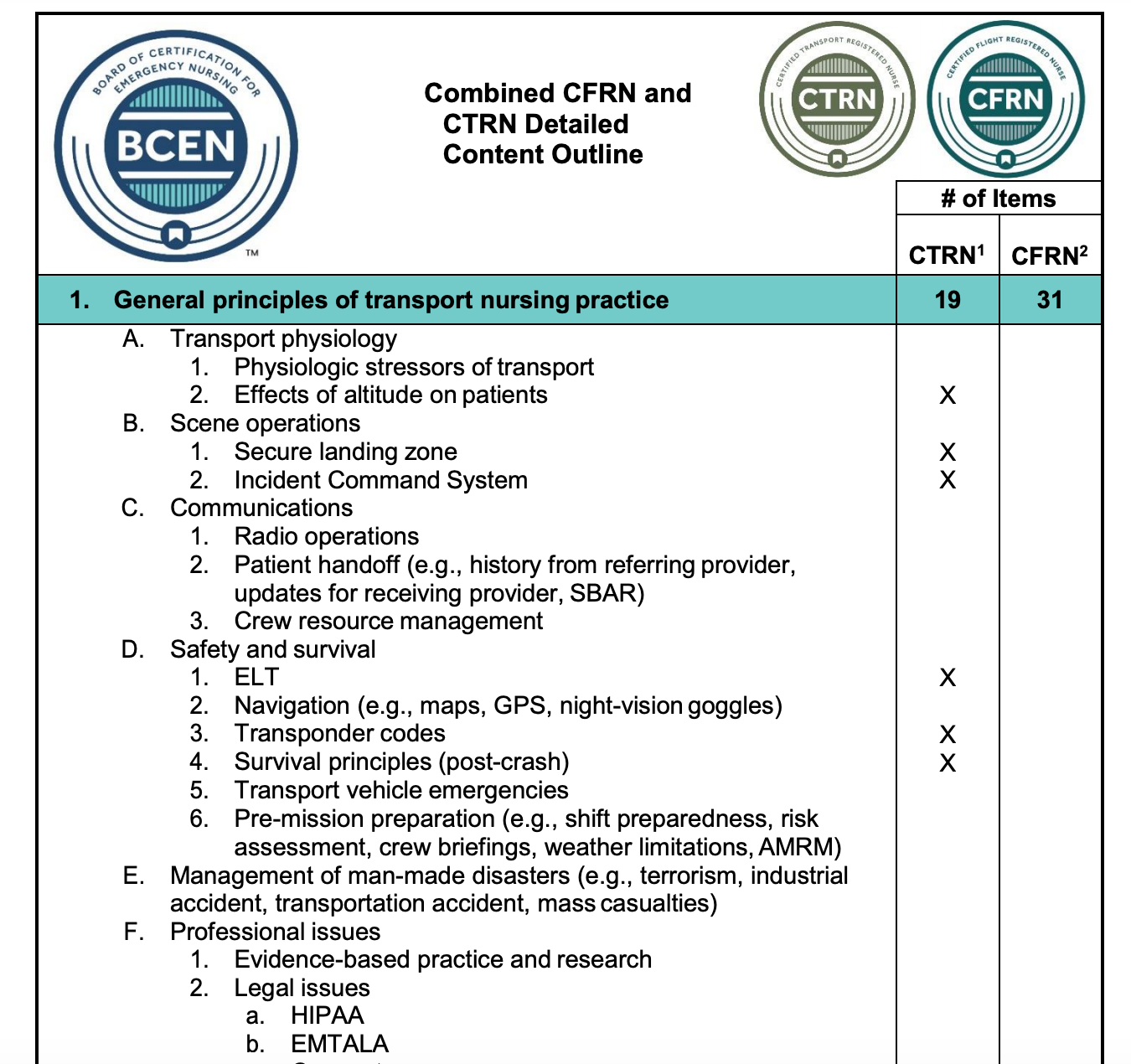
Additionally, if you’re not quite sure where to start studying, I recommend you utilize their Content Outlines! The organization quite literally gives you exactly what you will be tested on from topics and diagnoses, populations and procedures.


Screen Shot 2020-02-03 at 6.46.12 PM


So before we move any further in the study resources I used for the tests I took (TCRN, CEN, CFRN, and the CPEN)… I recommend you look up the Content Outlines for the test  you are planning to take. I did the work for you and attached the links below.

CEN * TCRN * CFRN / CTRN  * CPEN

Using these outlines will allow you to plan out your study time and help you narrow your focus on topics of strength/weakness. Most formal study resources will use this outline to organize their plans.


How I Studied

Now you don’t have to take my word for gospel but this was was the best method I had found for studying effectively. Generally what I did was found an online program for the test I was taking, I looked at what the major topic was, and read chapters of whatever textbook I had bought to study from pertaining to those topics and take notes on the key subjects. Then I would listen to the lectures and fill in notes around my previous in a different color pen or start on a fresh page if there was something different. I made sure when I was taking my original notes during my readings that I left plenty of room for more notes or doodles. Alternatively, if my study program came with lecture handouts or power points, I would print those out and take notes on those instead of hand writing notes. Also, very helpful and saved my wrists!

Example: When I was studying for CFRN, if I knew I was going to listening to a lecture on “Airway Management” I would read the entire chapter on the subject, take my notes, then listen to Flight Bridge’s lecture on the subject and take additional notes or doodles.

After I did those two things, I would do questions on the subject to build on my knowledge base. This I found to be very important because it’s one thing to build a foundation but another to build the house on top. Answering questions allowed me to  exercise my critical thinking skills which is what the exams seek to truly test. The more questions you  answer, the better you can get at it. Ultimately, the brain is a muscle–you need to work it for it to get stronger!

I also am a huge believer in the see one, do one, teach one method. So my poor preceptor/flight partner was inundated with me bouncing concepts off him (God love you, Dan–this post is for you!) My husband who while he is an EMT, does not really do concepts we’re being tested on was also a great resource for me–he probably knows STEMI criteria better than many paramedic students in their cardiology rotations from me drilling him (Hey Chris–how many millimeters?!)


The CFRN (and by Extension the CTRN)

Ok, so at long-last, I will talk about the actual resources I used for the exams. The first I will discuss is the CFRN (and CTRN). The CFRN and CTRN are relatively the same exam with a few exceptions. The CTRN is shorter at 130 scored questions (plus an additional 25 un-scored questions). The CFRN is a bit lengthier at 150 questions (plus 30 un-scored questions). The CFRN covers flight physiology and aviation safety and operations whereas it is exempt in the CTRN. Otherwise the content is the same. I have not personally taken the CTRN, but I plan to Spring 2020 and will utilize the same programming as the CFRN minus the flight components.

Resources I Used:

  • Patient Transport Principles and Practice, 5th Ed: If there was a CCT bible, I’m pretty sure this is it. My BCEN practice tests pretty much exclusively referred to this in my rationales. It is the ASTNA standards! Highly highly recommend! Get it here!
  • ACE SAT: Great resource full of practice questions for the CFRN but also FP-C (for you medics who might be snooping on this post). Get it here.
  • Back To Basics: Critical Care Transport Certification Review: I caution against using this exclusively as it is not comprehensive. There is some things missing but it is a great adjunct to your studying! Get it here.

Programs I Used:

  • I used the FlightBridge ED program, package #2 for this exam. It came with 36 CE hours, multiple review quizzes at the end of each video module, a review test at the end, a review book, and was good for one year after purchase. I felt the content was very easy to understand and Eric Bauer is very approachable. He has good social media presence and encourages people to reach out with questions. Flightbridge has a conference yearly called FAST. Additionally, they have multiple podcasts with great insights. Finally, the good folks there also authored a fantastic book on ventilator management–it really broke down and demystified vents for me. You can find the review programs HERE.
  • Pam Bartley is the “Passologist”. In addition to hosting multiple live courses, she also has a series of study guides for multiple exams. She includes review questions and key points guides and really hits all the highlights of the exam–she really nailed my CFRN exam. I’m pretty sure everything on her study guide was on my test! You can find her HERE. Or for live classes, check here!

Apps!!

  • Not too many good apps out there, unfortunately… Surgical Nursing Reviews from Nursing Pearls on the Apple App Store had a purchasable add-on for the CFRN (1000 questions). I’m not going to lie–I did not find this worth the money. I’d save your time and money, guys.
  • A really good resource though for clinical practice and for studying is called “Critical- Medical Guide” by The Barringer Group (I think this is Apple exclusive–sorry Android-ers). It is on its 15th version and is super up-to date. Great for critical care information, RSI dose calc, pediatric information, etc. It is pay to play–one time fee of 15$ but well worth it!

Useful Classes/Certifications:

  • Neonatal Resuscitation/STABLE Program
  • American Heart Association BLS/ACLS/PALS
  • American Burn Society Advanced Burn Life Support
  • Advanced Trauma Life Support (or Advanced Trauma Care for Nurses [ATCN])
  • Emergency Nursing Pediatric Course


The CEN

So for the CEN, I actually had a live class! My hospital sponsored a live prep class through Jeff Solheim Enterprises. However, I will say it was excellent. I had used one of Jeff’s online modules for my TCRN and much like that, his representative teaching the live class did not disappoint.

Resources I Used:

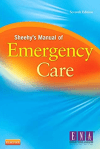
  • Sheehy’s Manual of Emergency Care, 7th ed: If Patient Transport was the bible of CCT, Sheehy’s is the bible of ED care. It is hands down the best book I’ve found for this. Through my career, I have referred back to it time and again. Beyond just prepping for the CEN, I recommend it for any ER nurse as a reference. You can get it here.
  • ENA CEN Review Manual, 5th ed: over a 1,000 questions plus 2 online tests. This book really simulates how questions are asked. I used an older edition but I recommend staying on top of the newer versions. Get it here.
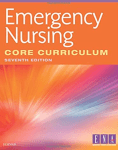
  • ENA Emergency Nurse Core Curriculum, 7th ed: I consider this a very good review guide of the core concepts of emergency nursing. It doesn’t have the depth of Sheehy’s but breaks things down to the need to know for the test. Get it here.

Programs I RECOMMEND:

  • So you’ll recall that I did a LIVE in-person class… not an online one. So if you’re looking for an online one, I have to tell you I did not use one myself for this test. I am recommending Jeff Solheim based on the fact that I used him for TCRN online and I used his live class for CEN.
  • If you use his online class (here), it costs 150$ for a one year access. This is good for 17 CE hours with a 30-day satisfaction guarantee. He also offers a monthly access for 50$ a month. Depending on how fast you study or how long you need access for, a monthly fee could save you a lot of money. He also sells an entire prep manual on his website for 25$ (here). If live courses are more up your alley, here is a list of his dates. Jeff also has an APP and has a great social media presence– his Instagram often will post questions regarding the exams which is awesome for those moments you’re scrolling on the toilet (you nasty….).
  • Again– I am throwing Pam Bartley up here with her excellent packages! (She also has live classes… check dates near you!)

Apps!!

  • As stated about Jeff’s app.
  • Pocket Prep is a great developer who makes prep programs for a variety of tests. The CEN prep was a great resource for questions when I was getting ready for the test. It had a ton of questions, gave me the ability to customize my practice tests depending on what content I wanted to study, gave me rationales and where my areas of weaknesses were. Its awesome, guys! Get it here!

Useful Classes/Certifications:

  • Neonatal Resuscitation/STABLE Program
  • American Heart Association BLS/ACLS/PALS
  • American Burn Society Advanced Burn Life Support
  • Advanced Trauma Life Support (or Advanced Trauma Care for Nurses [ATCN])
  • Emergency Nursing Pediatric Course


CPEN


TCRN


BCEN Practice Tests

At time of this post (2020), BCEN has reduced the cost of the practice test in celebration of “Year of the Nurse”. Where the tests were previously 75$, they are currently 40$ and well worth every penny. Not only do they simulate the exact testing software you will see, they show you how you fare on the tests, show you rationales as well as the references for the rationales you are given. I have attached the links for each of the exams for your convenience.

CEN * CFRN/CTRN * CPEN  * TCRN


So basically thats it! Thats the big secret to how I’ve done it. Really its just a bunch of read and apply. Obviously, this is just my experience. You may have other things that work for you. Try on a few things and see what works for you. I may be speaking completely out of turn for what works for you–thats ok! But hopefully I found a few jumping points for you to start.

Certification is awesome. It is not easy by any stretch of the imagination but the feeling of holding that printout after the test is amazing and when the package with your certificate comes in the mail a few weeks later and the awe washes over you again… there is nothing like it. You earned it.

Clear skies and tail winds, friends! Best of luck and as always, let me know if you have questions or requests!


Do you have any recommendations for resources? What worked for you? Drop a comment on this post to share your study techniques with your peers or share what programs or resources you liked!