Three Years, a Dream, and a Flight Suit: Why That Might Not Be Enough

By someone who’s been doing this long enough to know better

Let’s set the scene: you’ve got three years in critical care under your belt. Maybe you’re a paramedic who can RSI in your sleep or an ICU nurse who can titrate five drips with one hand while eating cold pizza with the other. You’ve memorized the CAMTS requirements, passed your CFRN (maybe), and your Google search history is full of things like “how to not puke in a helicopter.

You’re ready to fly, right?

Well… slow your rotor wash, baby nurse.

Three years of experience is no joke. That’s a solid foundation. But it doesn’t mean you’re fully baked yet. And in flight medicine, undercooked can get spicy real fast. There’s a reason why a lot of flight teams quietly prefer five or more years, even if the brochure says three. That extra time matters, and it’s not just because we’re gatekeeping the cool jackets.

Let’s Talk About the Unicorn Myth

You know the one. The myth that once you hit three years, you’re ready to slap on a flight suit and start saving lives from 2,000 feet in the air like a stethoscope-wielding superhero.

But flight nursing isn’t just ICU or EMS in the sky. It’s ICU plus ER plus trauma bay, plus resource nurse, social worker, and tech support—sometimes all at once—while flying through turbulence and listening to your pilot talk about wind vectors like it’s a normal Tuesday.

The Research Is In, Y’all

According to a 2022 CFRN Pulse Survey, over 35% of flight nurses have more than 10 years of experience. That’s not by accident. Those extra years mean more reps with sick patients, more bad calls under your belt, more creative cursing during equipment failures, and most importantly, better judgment when things go sideways mid-flight (which they do).

A study in PMC also found that more experienced nurses tend to have higher “compassion satisfaction.” Translation? They’re less likely to lose it when their vent fails, their partner is stress-eating almonds, and their patient’s BP is circling the drain at 2,500 feet.

Now Enter: Maturity

I know, I know…nobody likes being told “you just need to be a little older.” But here’s the deal: age equals perspective. And flight nursing requires the kind of emotional intelligence that only comes from years of experience and probably a few existential crises. You need to be the calmest one in the aircraft while your partner’s troubleshooting a dying IV, your pilot’s yelling about airspace restrictions, and your patient is suddenly bleeding again from a place you already bandaged.

Let’s be honest, maturity also helps you not panic when your patient is crashing and your monitor screen goes dark, and the only thing you hear is the faint beep of your own stress response.

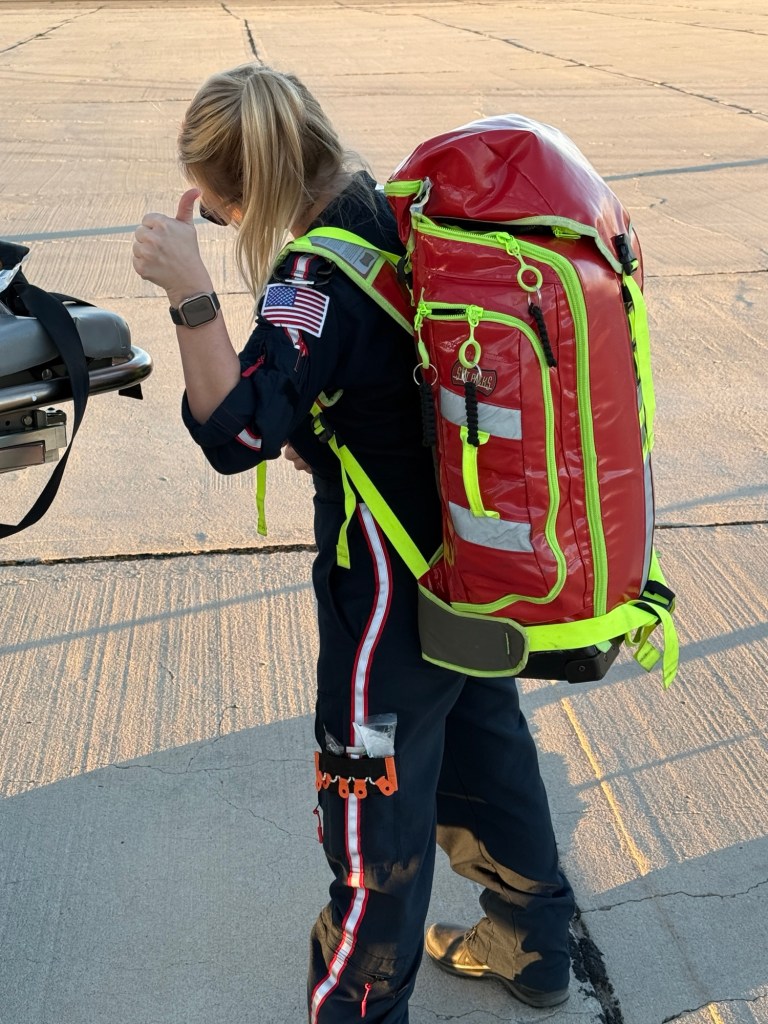
First Day of Flight, 2018

Personal Growth: A Seven-Year Transformation

I started this journey at 28, full of energy and ambition. Now, seven years later, I look back and barely recognize that version of myself. The experiences, challenges, and yes, even the mistakes, have shaped me into a completely different nurse and person. It’s not just about accumulating years—it’s about the growth that comes with them.

Interestingly, research backs this up. Developmental psychology studies suggest that people often experience significant shifts in perspective, emotional regulation, and decision-making every five to seven years. In a high-stakes environment like flight medicine, those changes can be the difference between reacting and responding.

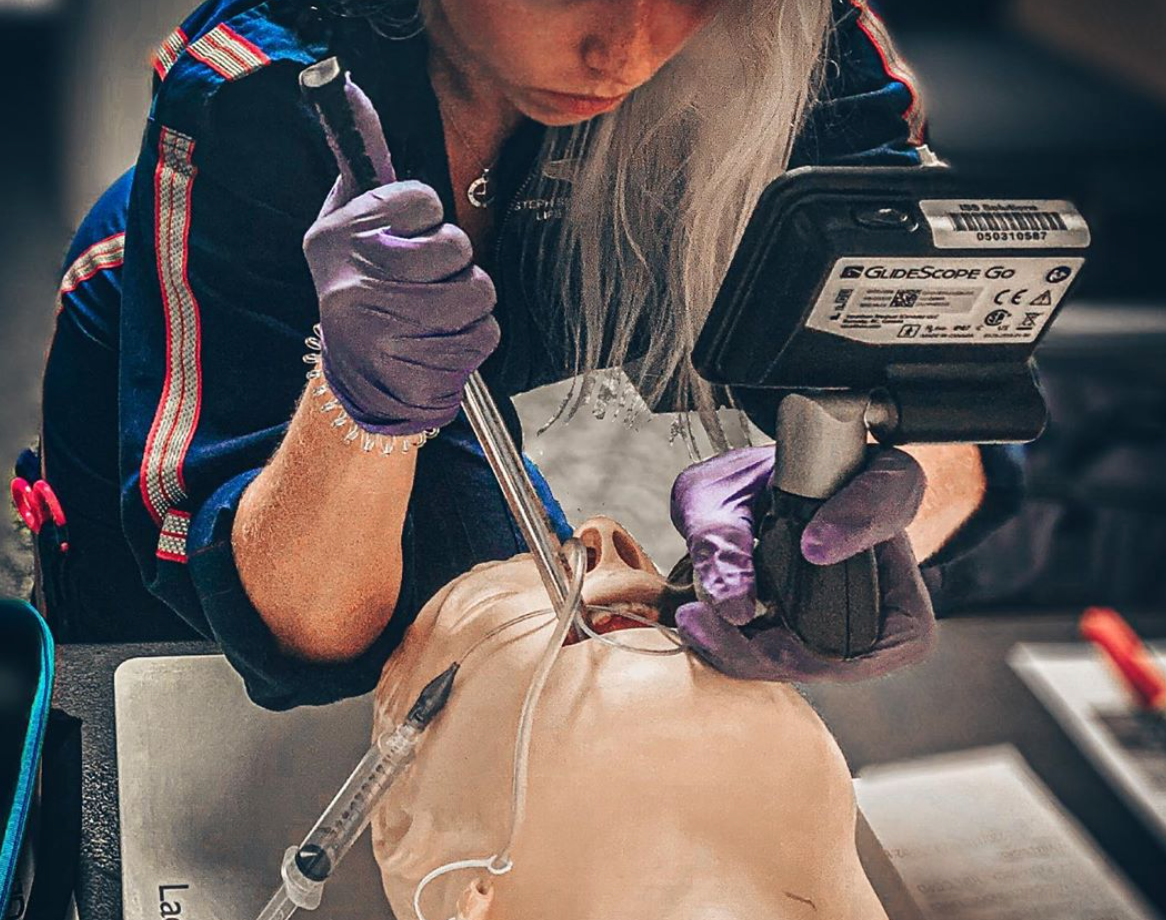
Year Six(ish), 2024

Bottom Line: It’s Not About “More Time to Wait.” It’s About More Time to Prepare.

Three years will get your foot in the door. But taking a little more time—whether that means another couple years in the unit, more variety in your calls, or just letting your prefrontal cortex finish cooking—isn’t a punishment. It’s a favor to future you. The one who’ll be flying at night in winter with a hypotensive trauma patient, a rookie pilot, and a med bag that’s somehow missing the Doppler.

If you’re at year three and ready to go? Hell yes. Chase the dream. But go in with your eyes wide open and your ego checked. Because this job doesn’t just demand skill. It demands grit, grace under pressure, and a little seasoning.

And if you’re already flying with “just” three years under your belt? That’s okay too. Just know it’s not about having enough time. It’s about making that time count.

And hey—at least now you know to bring your own snacks. Nobody tells you that part in orientation. Or what to wear under your flight suit. Or that you better figure out your hydration strategy, because once you’re in the aircraft, you’re not peeing until you’re back on the ground.

(Flight nursing: where your bladder learns discipline right alongside your brain.)

-Clear Skies and Tail Winds
Are We Misremembering or Is It Easier to Get into Flight Nursing Now?

Spoiler: It’s not just you.

I remember when getting into flight nursing felt like chasing a unicorn while carrying a 12-lead and an arterial line setup. It was the elite club of critical care, the badge of honor you earned after years in the trenches, a hundred code browns, and more night shifts than the moon. You needed ICU cred, trauma street smarts, the ability to start an IV in the dark (with turbulence), and preferably a personality that didn’t crack under pressure, or in the co-pilot’s seat.

Now? Blink twice and someone’s in a flight suit with just the minimum required experience and a freshly laminated NRP card.

What. Is. Happening.

Okay, let’s talk about the pandemic-shaped elephant in the room. COVID didn’t just shake the snow globe, it shattered the whole thing. Healthcare was gutted, burned out, stretched thin, and then duct-taped together again. Experienced nurses left in droves, either because they couldn’t take another shift in PPE or they realized their lives were worth more than their paychecks (wild concept, right?). And just like that, the flight industry, already a small, specialized corner of nursing, was desperate.

Enter: lowered barriers. Don’t get me wrong, some of the newer folks coming in are absolutely incredible. Passionate, smart, adaptable. But the truth is, the bench just isn’t as deep anymore. So programs that once required five years of ICU, a resume written in Latin, and a letter of recommendation from the ghost of Florence Nightingale are now hiring with, well, let’s just say a little more flexibility.

Orientation programs got longer. Clinical ride time got shorter. Preceptors are working overtime trying to build experience that normally takes years because it has to happen now. And while this isn’t about blaming individuals (again, a lot of these nurses are stepping up big time), it’s worth asking: what does this mean for safety, patient outcomes, and the long-term health of the flight community?

Honestly? It’s a mixed bag.

On one hand, the door being slightly more open is awesome for motivated nurses who’ve dreamed of flying but didn’t want to wait a decade and sacrifice a goat under a full moon to get there. On the other hand, there’s something a little nerve-wracking about seeing the steep learning curve of flight medicine get compressed into a crash course, literally and figuratively.

Flight nursing isn’t just sexy uniforms and skyline selfies. It’s knowing how to titrate pressors, dose the sedation, all while troubleshooting a failing vent at 3,000 feet. It’s recognizing when your patient’s going south and there’s no code team to back you up, just you, your partner, and whatever fits in that aircraft. And let’s be real, there’s a difference between being “trainable” and being ready for a patient actively trying to die on you mid-air.

So yes, it’s easier to get in right now, but that doesn’t mean it’s easier to stay. Flight nursing still demands the same resilience, critical thinking, and ability to function with one eye on your patient and the other on your altimeter. The pressure is just distributed differently now, and it’s often falling on the backs of experienced preceptors and med crew trying to bridge the gap.

In the end, the skies may be a little more crowded with new faces, but if we nurture them, teach them right, and don’t skip the hard conversations, maybe this next generation will carry the torch with just as much grit and grace.

And if not? Well, I’ll be the one in the corner muttering about “back in my day” while re-taping an IV mid-flight.

Is it Her? Is it Me? Is it Meant to Be?: Dealing with Alpha Preceptors in Your New Pack

I was recently asked “Steph… I’m struggling with my preceptor. I feel like my preceptor is very hard on me and they’re the best at what they do. I feel like sometimes they leave me feeling really frazzled and put on the spot. I know this job is really high stakes and I’m new–should I expect to feel like this and suck it up; just take the intense criticism? Should I talk to them? Am I really cut out for this job?”

It’s Not Always You– Recognizing the Learning/Teaching Mismatch

Wolves in a Pack from Getty Images

First, I want to confirm that this culture is one that attracts the alpha-type provider. You can expect high-energy, assertive-types in this wolf-pack. That is the nature of this business. I would learn that it isn’t personal nor a reflection of your shortcomings. We all came here because we’re similar personality typologies. It doesn’t mean that people are “mean” or “aggressive.” That means they may be overly driven and as such, may have a tendency towards being perfectionists and having high-expectations. These individuals may have been trained under high-stakes conditions and simply believe that they must in turn train you that way for you to thrive.

By now, you’re no longer seen as a newly-hatched duckling, fresh out of school, but rather a grown-ass bird who should be ready to hold their own (“fly, buddy! *as you’re yeeted out the nest*).

Some may have been in the business so long, they have lost touch with what it is like to have to begin again. Either way, don’t take it as a personal affront. It isn’t personal. It may be that person’s unique teaching style.

Confidence/Competence and Asserting Your Needs

That being said: you wouldn’t have gotten hired, nor would you still be here if you didn’t deserve to be here.

Further, the fact you care reasserts your place. I discussed this at length in my post about imposter phenomenon (you can refer to it here). It is not unusual to feel those feelings you felt the first time you came off orientation all those years ago: unsure, shakey, and nervous. The combination of alpha-teammates and your uneasiness is a lethal dyad for confidence. I want you to know–you’re fine. The feelings are normal and doesn’t mean you aren’t cut out for this job. There is a difference between your learning style and your provider style.

If you’re coming into flight, you’ve probably worked a little while by now. Recall when you first entered your job: you were probably a very different person than when you left it for this flight job. At your old job, very likely you were probably training the new hires or at least working with fairly new people. I imagine you were confident, competent, and known to be reliable at your position. Now you’ve moved into a completely new field.

It takes a full-year to really get competent in anything new and when you switch, reset the game clock. It can take up to 2-3 years to become truly confident enough to handle anything thrown at you. However, even the most senior staff member has doubts, sometimes–they have just learned how to play it cool and use their resources. Don’t let the air of “nothing phases them” make you question your own abilities.

Coming full circle… if you feel like you aren’t getting what you need from a preceptor, it is probably time to have a talk about your goals, your learning style, and what you need with your preceptor. If your preceptor is as good of a flight nurse (or paramedic) as you say they are, they will understand that maybe you two need to change your approach to the learning process. Your learning is ultimately your responsibility as an adult–you need to take the reins and articulate if you aren’t getting what you need rather than wait until it is too late to bring up that you didn’t get what you needed. Speak up early and ask for what you need.

Plan of Attack: The S%$T Sandwich Method

Generally, what I recommend is this (from some personal experiences throughout my entire nursing career and as a preceptor myself): use the “s%$t sandwich”.

First: articulate what you respect and want to emulate in your preceptor. I don’t mean blow smoke up their gluteus maximuses (maximi?)–be sincere. Take what qualities you want from them and verbalize that you want to adopt from them. Discuss what you think is going well with your preceptorship: what you like that they do or how they do it with you.

Then the s%$t: be honest about what you feel needs to be done differently (and why). If you are a person who needs to learn by doing (a kinesthetic learner), then you need to explain how just reading about procedures isn’t helping you. If you feel like working in a team of 3 people is not helping you learn to function in a team of 2, you need to verbalize the need for one of the teammates to stand back over your shoulder more as a coach to allow you to learn (this is something I myself have struggled with–asking teammates to stand back and allow me to function as a crew member and they watch instead… it is a hard conversation, I know). If you need more simulation time, ask for it. If you need more time with a specialty, ask for it. Articulate exactly what you need in a polite manner that utilizes “I/me” statements than “you” statements (these often come off abrasive).

Finish with a high note: conclude with positivity for how things will continue to go. I like to end things optimistically. This is your chance to express gratitude for your preceptor listening and how you look forward to continuing to work with them. I can’t stress enough: don’t apologize for what you need! THANK THEM for listening but DO NOT apologize for expressing what you need to succeed. Remember… ALPHA-types. Unless you truly have something to apologize for, do not apologize for advocating for yourself. Assertiveness is a respectable quality and one the best providers have.

Not Every Preceptor is for You and That is Ok

Most great preceptors will listen and try to help you however, that is not guaranteed. If after your discussion, you are still finding you are struggling with your preceptor don’t be ashamed of asking for someone else. Thank your previous preceptor and if asked, be honest about your learning style differing from their teaching style. It never has to be a personal affront. Your success hinges on your ability to be able to learn and your team relies on you to learn what you need to function. If someone’s feelings do happen to get hurt, they will heal in time (their egos are their responsibilities, not yours). The alternative is your lack of competence could have worse consequences for your patients, your teammates, and your career’s potential as a flight crew member.

A lot of dealing with preceptors comes down to communication. Sometimes, you and a preceptor will just not click. It is not always learning and teaching styles but rather just a clash of personalities. If you are on the receiving end of hazing or harassment: do not tolerate it. This is not a culture that should be tolerated in flight and I encourage you NOT to put up with it because you feel it is your due. Bullying is not acceptable nor should it be normalized in the flight industry. If you cannot resolve things with your preceptor, I encourage you to bring it to the attention to the next-in-command. No crew member should ever have to work in a hostile work environment when they are expected to be of clear mind to care for human beings. You are worth more than being treated poorly–please do not ever forget your worth and that you earned your place here.

Dealing with preceptors is an issue that plagues both new and experienced providers. Flight is a tricky beast because of the typology of the humans it attracts. While we run as a pack, sometimes we like to partake in the soft flesh of our young. It is getting better but it is not a perfect industry. This is why it is of upmost importance that the new flight provider advocates for themself early and learns to traverse the culture with tact and grace. You worked hard to get here and you will still have mountains to climb to stay here, however, understand that you ARE wanted here and there are many of us who want to truly see you succeed.

-Clear Skies and Tail Winds

Do you have suggestions for dealing with difficult preceptors? Please drop them in the comments below!

RN Looking to Paramedic?

A question I get a lot is: “I have my RN or am about to receive it, but how can I obtain my paramedic?”

There are a few options. One is go back to school and get it… for some, this isn’t reasonable. In some states, like Pennsylvania, you can challenge the Paramedic cognitive test if you have an existing EMT certification and receive a Prehospital Registered Nurse certification which allows you to operate at the level of the paramedic and to a margin above in the prehospital setting in the state; however, this is limited to just Pennsylvania.

Another option is a bridge program. I recommend the two below.

Creighton University- Two Week In Person at the University

Crowder College 16 Week Remote- Self paced, Clinicals In Your Area

Hopefully this helps some of you!

-Clear Skies and Tail Winds!

Good, Better, Not Best…

You read that right. We need to stop being the best.

We need to stop having this ideal in our heads we need to hustle until we’re the best at what we do in our respective fields. 

By now you’re probably dismissing me as lazy and incompetent, or at minimum: copping out. 

Hear me out. 

When you climb to the top of ladder and run out of rungs, where is there left to go? Nowhere. So when you’re the best, what do you have left to strive for? Nothing. So what is to say you won’t fall to the level of complacency and eventual incompetence? Nothing. You’ll have your hungry ones who will fight to stay on top, sure. They’re the exception and not the rule. However, they too are not immune–that constant hustle is exhausting and complacency is pretty tempting. 

What if: instead, we tried to be better than ourselves yesterday but not as good as what we’ll be tomorrow?

Progress isn’t linear, it’s cyclic. It’s a war; each day a new battle against mediocrity. 

I don’t wanna be the best, I wanna be great. I don’t need to be known for how I was the best flight nurse or even the best nurse. I’d rather be remembered for my constant drive to better myself even when I was wrong. I’d rather be known for my passion even when I failed. I’d rather be known for my love of passing that love on to others or the inspiration I bequeathed.

I don’t wanna be the best because the best get cocky and they kill people. The best still can mess up because they know they’re the apex predators…there is a reason sharks don’t have to turn their heads and yet they die by swimming straight into nets. This is the concept of hubris from the Ancient Greeks and the basis of the Christian proverb: “pride cometh before the fall” (Proverbs 16:18).

Perhaps this seems like a controversial idea. Why wouldn’t someone want to be the best in a field that almost always requires and expects you to be the best of the best? A field that is highly competitive?

Because of complacency.

When you strive and hustle for so long and then get what you want, you get complacent. You know who isn’t complacent? The guy coming after your job. They’re working their ass off trying to get what you have. If you don’t wanna continue to earn your title—don’t worry, someone else will. 

I’m ok with other people being better than me. Because that gives me a constantly moving target to aim for. It keeps me excited and keeps me hungry for more. It makes me work and train. Having role models means I need to keep on my toes to stay great. I don’t want to be the best because I want to stay working for what I have. It makes me question “why” and “how”, not just nod and blindly say “ok, fine.”

We hold a great responsibility.

We’re the role models, we set the standards. People want what we have… that’s heavy. Not only do we have lives in our hands but we also hold the potential to inspire. Our work ethics model how others shape theirs. Eyes are on us when we shirk our duties to train, keep up our equipment, and maintain the competencies keeping us sharp and competitive. Taking out the fact it is a disservice to our constituents… it is a disservice to ourselves and those who look at us with stars in their eyes. 

And when they (these unbeknownst protégés of ours) come to us and tell us “I want to be just like you….” I hope we all have the humbleness to be able to look to these people and say “No… I want you to be better than me, be smarter and faster, more talented and successful than me… do more, be more than me… that’s my wish for you…” 

So don’t strive to be the best… strive to be better. Strive to stay as hungry as the first time you wanted to apply for the job. 

Don’t be good, be better, but don’t kill yourself being the best at the cost of your health, sanity, and life… the only one you’re competing with is yesterday-self and tomorrow-self. 

-Clear skies and tail winds, friends